
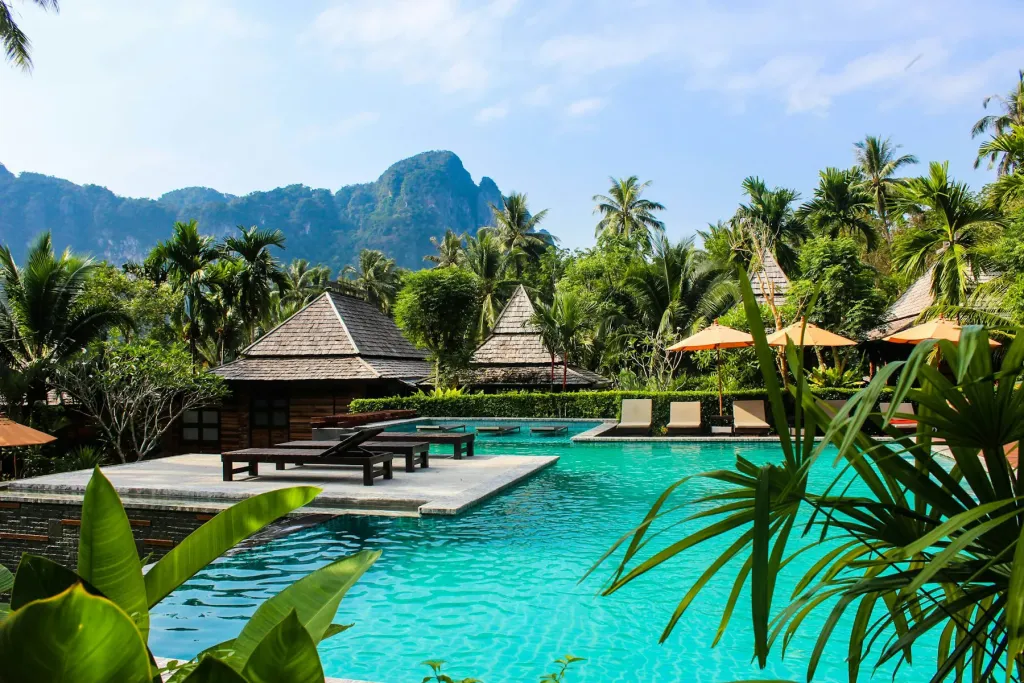
The first morning, I woke at 5:40 to a rooster, a gecko and a chorus of birds I couldn’t name, and for a moment I had no idea where I was. Then I pulled back the curtain. Beyond a wooden deck and a small pool lay a wall of green: coconut palms, a ravine so deep I could only hear the river at the bottom, and mist lifting off the trees in slow, lazy ribbons. I made a cup of Balinese coffee, sat on the deck in a robe and did not move for an hour.
That was the whole idea. After two busy weeks traveling through Indonesia with my friends Sam and Elena, we booked seven nights at a jungle resort in the hills near Ubud with one rule: no itinerary. No sunrise volcano treks, no 6 a.m. vans to waterfalls, no list. We would swim, eat, read and say yes to anything the day offered.
It turned out to be the most restful week of the whole trip, and maybe of the past few years. Here is what a slow week in the Balinese jungle actually looks like, what it costs, and the spa ritual we are still talking about.
In this story8 sections
Why the hills, not the beach
Most first-time visitors picture Bali as beaches, and the south coast has plenty of good ones. But for a week of true rest, I would choose the hills around Ubud every time. The air is noticeably cooler, often 5 to 8 degrees lower than the coast, the nights are quiet, and the landscape is pure green: rice terraces, river gorges and temples wrapped in moss.
Our resort sat on the edge of the Ayung River valley west of Ubud, an area dotted with resorts that hang over the gorge. Ubud town was about 20 minutes away by car, close enough for an afternoon of markets and cafés, far enough that we never heard a scooter at night.
The villa, honestly reviewed
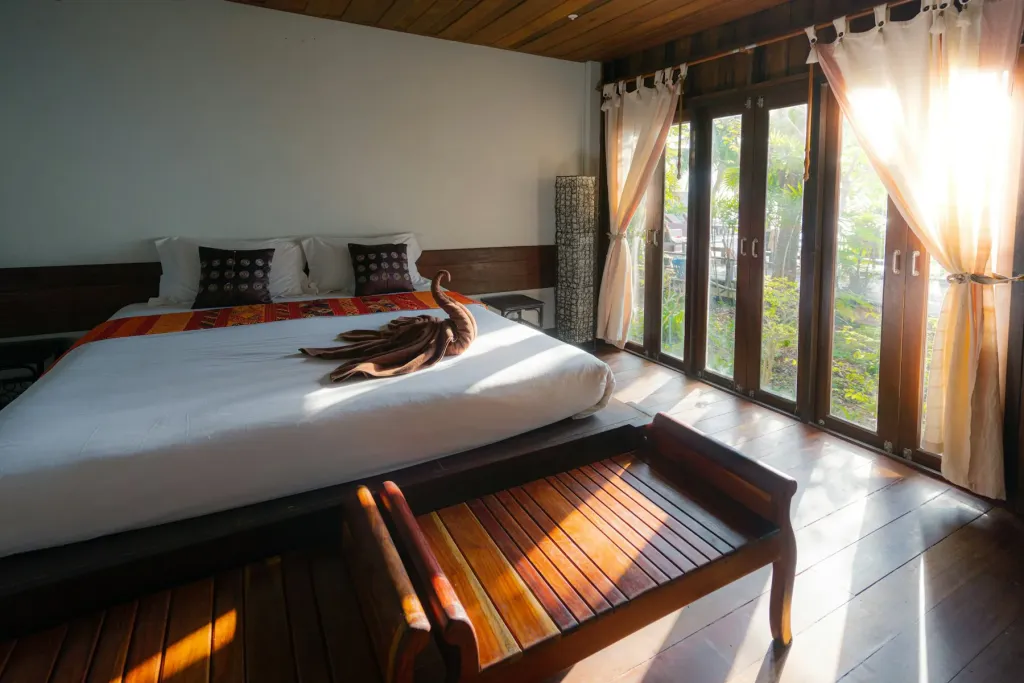
We paid about $420 a night for a one-bedroom pool villa, which we split three ways with a rollaway bed. (Two of us would have been more comfortable; three of us had more fun.) It included breakfast, afternoon tea and a daily yoga class. In high season the same villa runs closer to $600.
What was worth the money:
- The private pool. Small but deep enough to float, perfectly placed for the afternoon sun, and completely private.
- The outdoor bathroom. A stone tub under a frangipani tree. Showering in the rain under a roof of leaves is a strange kind of joy.
- The staff. By day two, they knew how each of us took our coffee. On day four, they made Elena a birthday cake she never mentioned.
What was not perfect: the long, steep stone path down to our villa was hard work in the humidity, ants found our snacks within hours, and the Wi-Fi faded in and out. Then again, we had come to disconnect.
By the third day I stopped wearing a watch and started telling time by the light on the palms.
Maya Collins
A typical day of doing nothing
Our days took on a rhythm almost immediately. Yoga at 7:30 in an open pavilion facing the valley. Breakfast for two hours: tropical fruit, black rice pudding with coconut milk, and the resort’s excellent nasi goreng with a fried egg on top. A long swim. A nap. Lunch at the poolside warung, which made a mie goreng I would fly back for.
Afternoons were for small adventures, only when we felt like it. One day we walked the Campuhan Ridge Walk, an easy, grassy path on a ridge between two rivers, best done before 9 a.m. or after 4 p.m. Another day a resort guide took us through the rice paddies behind the property, explaining the subak water system that has fed the fields for about a thousand years. We visited the water temple at Tirta Empul, and Sam bought a carved wooden frog in the Ubud market that he still claims was a bargain.
The spa ritual we still think about
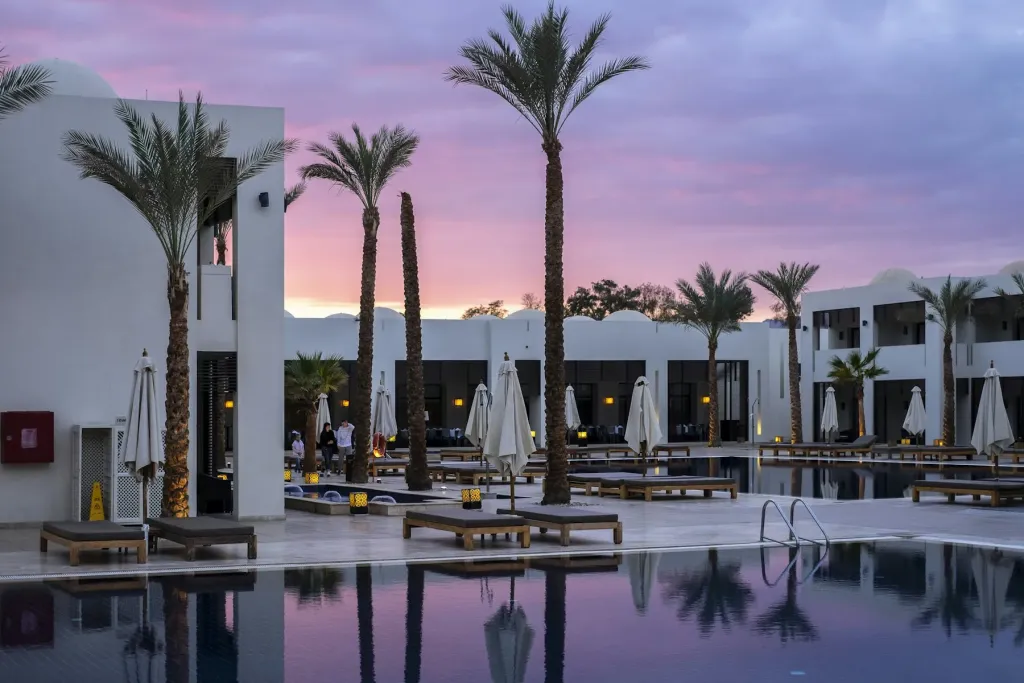
On the advice of the front desk, we booked our spa appointments on the day we arrived, and it was a good thing: the popular evening slots were taken for the whole week by day three. Most of the resort’s treatments cost $60 to $150, a fraction of what a similar experience would cost at home.
The one that lingers is a two-and-a-half-hour Balinese ritual, about $135. It began with a foot bath scattered with frangipani petals, followed by a traditional Balinese massage, firm and rhythmic, with long strokes and acupressure. Then a warm boreh scrub, an old village remedy of ground spices like ginger, clove and cinnamon, which tingles and warms as it dries. After the scrub came a flower bath in a stone tub overlooking the jungle, with ginger tea and slices of fresh papaya on the side.
I walked back to the villa in the dark afterward, smelling like a spice market, and slept nine hours straight. All three of us booked it again before we left.
Good to know
- Book spa treatments on arrival day; the best evening slots go fast.
- Off-season (roughly November to March, outside the holidays), ask about free upgrades to a pool villa. We got one simply by asking.
- Bring a light rain jacket even in the dry season. Afternoon showers are common in the hills.
Where we would stay again
Ubud’s hills are full of excellent jungle resorts in every price range. These are the three kinds we would happily book again, from a splurge to a sweet spot.
Jungle stays we’d book again
 StayOur pick
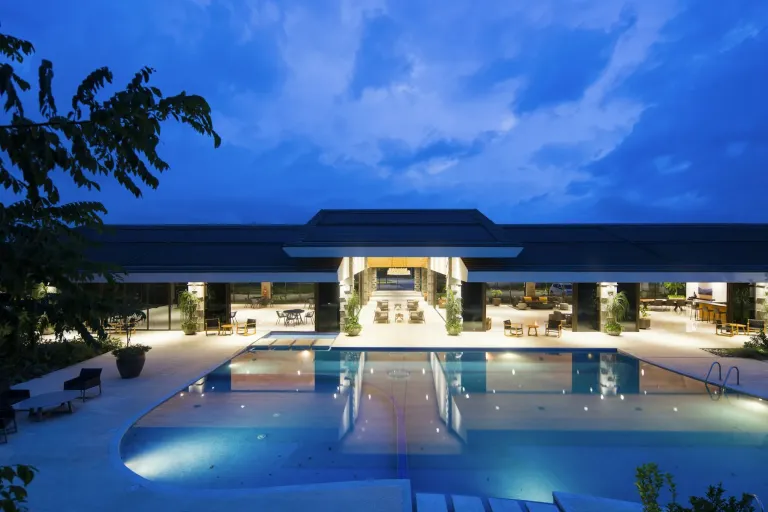
A river-valley pool villa resort in Sayan
Sayan, Ubud, Bali
- Private pool villa
- Daily yoga
- Breakfast included
 StayBest value
A rice-terrace boutique hotel north of Ubud
Tegallalang, Bali
- Terrace views
- Shared infinity pool
- Free shuttle to Ubud
 ExperienceDon’t miss
Traditional Balinese spa ritual
Ubud, Bali
- 2.5 hours
- Boreh scrub and flower bath
- Book on arrival
from$135/ person
See options — Traditional Balinese spa ritualSome links are affiliate links: we may earn a small commission at no extra cost to you.
Planning your own slow week
Getting to Bali from the US takes time. There are no nonstop flights; most routes connect through Asian hubs like Taipei, Seoul, Tokyo, Singapore or Hong Kong, and the trip from Los Angeles or San Francisco takes around 20 to 24 hours door to door. From Ngurah Rai International Airport in Denpasar, Ubud is about 90 minutes by car, longer in afternoon traffic. Most resorts offer airport transfers for about $30 to $50, and it is worth it after that flight.
US citizens can get a visa on arrival for about IDR 500,000 (roughly $32), valid for 30 days, or apply online in advance. Bali also charges a tourist levy of IDR 150,000 (about $10) per visitor, which you can pay online before you go. The local currency is the Indonesian rupiah; cards work at resorts, but carry cash for markets and temples.
The dry season runs from about April to October, with July and August the busiest. We went in late May and found it nearly perfect: sunny mornings, the occasional afternoon shower, and lower prices than high summer.

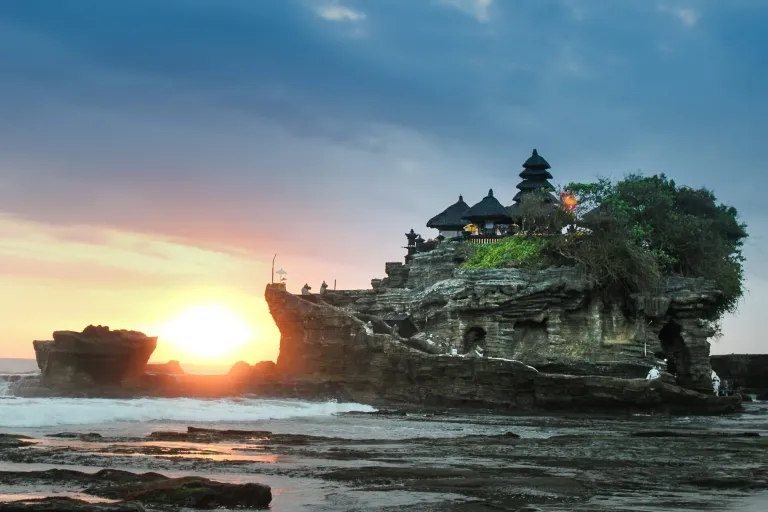
Destination guide · Indonesia
Bali
Temples, rice terraces and surf towns
- Best time to visit
- April to October (dry season)
- Daily budget
- Budget-friendly
- Visa for US citizens
- Visa on arrival, 30 days ($35)
- Language
- Indonesian, Balinese
- Currency
- Indonesian rupiah (IDR)
- Time zone
- Asia/Makassar
On our last morning I sat on the deck again with my coffee and watched the mist rise out of the valley, just like on the first day. Nothing had changed except me. If you have been running at full speed for too long, give yourself a week like this. The jungle is very good at slowing you down.