

We left Salt Lake City at 6 a.m. on a Saturday in early October: me, a borrowed Sprinter van that belonged to my cousin, a cooler full of Palisade peaches I’d hauled over from Colorado, and a loose plan to see all five of Utah’s national parks before the first real cold snap. I say “we” because the van had a personality. It rattled on washboard roads and sighed every time I shut the sliding door, and by day three I was talking to it.
Twelve days is not a lot of time for Arches, Canyonlands, Capitol Reef, Bryce Canyon and Zion. Plenty of people do the Mighty Five in a week. I wanted the opposite: one long, slow loop with real mornings in each park, a rest day I didn’t feel guilty about, and enough slack to say yes when a ranger mentioned a trail I’d never heard of. The total came to about 1,050 miles of driving, eleven nights of sleeping in the back of a van, and a lot of sunrises.
Here is the route I drove, what it cost, and the trails I’d set an alarm for again.
In this story9 sections
The loop, and why I drove it clockwise
The classic loop starts in either Salt Lake City or Las Vegas. From Salt Lake I went east first: about 230 miles (four hours) down US-6 and I-70 to Moab, then west along Utah Highway 24 to Capitol Reef, south on Scenic Byway 12 to Bryce, and on to Zion before the long run home up I-15. Driving it in that direction meant the busiest park, Zion, came last, on a Tuesday and Wednesday instead of a weekend. It also meant Byway 12, one of the most beautiful roads in the country, fell in the middle of the trip when I was rested enough to enjoy it.
The rough split was three nights around Moab for Arches and Canyonlands, two at Capitol Reef, a night near Boulder, two at Bryce, three for Zion and the drive back. Rather than list every turn, here is how the days actually fell.
Itinerary
Twelve days, day by day
- 6 days
- 21 places
- $475 on the ground
Day 1
Days 1–3: Moab and Arches
- Arches NP
- Delicate Arch
- Devils Garden
Timed-entry reservation for the first morning, then Devils Garden before the heat. Camped on BLM land along the Colorado River.
Day 2
Day 4: Canyonlands, Island in the Sky
- Mesa Arch
- Grand View Point
- Shafer Canyon Overlook
Mesa Arch at sunrise, a long lunch at Grand View Point, and an early night.
Day 3
Days 5–6: Capitol Reef
- Fruita
- Hickman Bridge
- Cassidy Arch
- Scenic Drive
Two nights at Fruita Campground among the orchards. My rest day was here.
Day 4
Day 7: Scenic Byway 12
- Boulder
- Hogsback
- Lower Calf Creek Falls
Six-mile round-trip hike to a 126-foot waterfall, then a slow drive over the Hogsback.
Day 5
Days 8–9: Bryce Canyon
- Sunrise Point
- Queen’s Garden
- Navajo Loop
- Fairyland Loop
Cold nights near 25°F (−4°C) at 8,000 feet. Fairyland Loop was the highlight.
Day 6
Days 10–12: Zion and home
- Springdale
- Pa’rus Trail
- Emerald Pools
- Canyon Overlook
Shuttle into the main canyon, a short Narrows walk in rented gear, then 310 miles back to Salt Lake City.
Estimated on-the-ground cost$475
Arches and Canyonlands: the early-alarm parks
Arches has run a timed-entry reservation system in the busy months, roughly April through October, for anyone entering between 7 a.m. and 4 p.m. I booked my slot on Recreation.gov a few weeks ahead, but honestly the better trick is to go before 7. I was at the Delicate Arch trailhead at 6:10 with a headlamp, and the 3.2-mile round trip felt like a private event. The last stretch, a ledge around a sandstone fin, opens onto the arch so suddenly that the woman ahead of me laughed out loud.
By 10 a.m. the parking lots were full and the slickrock was radiating heat even in October, so I retreated to the shade of a cottonwood by the river and ate two peaches in a row. That rhythm, hard and early then lazy and late, became the shape of the whole trip.
Canyonlands is the quieter neighbor, and Island in the Sky is the district to see if you only have one day. Mesa Arch at sunrise is famous for a reason: the underside of the arch glows orange as the sun hits it. It is also famous for crowds of tripods, so arrive 45 minutes early or accept a spot in the second row. The view I actually think about is Grand View Point at midday, when the canyons below look like a map someone crumpled and left in the sun.
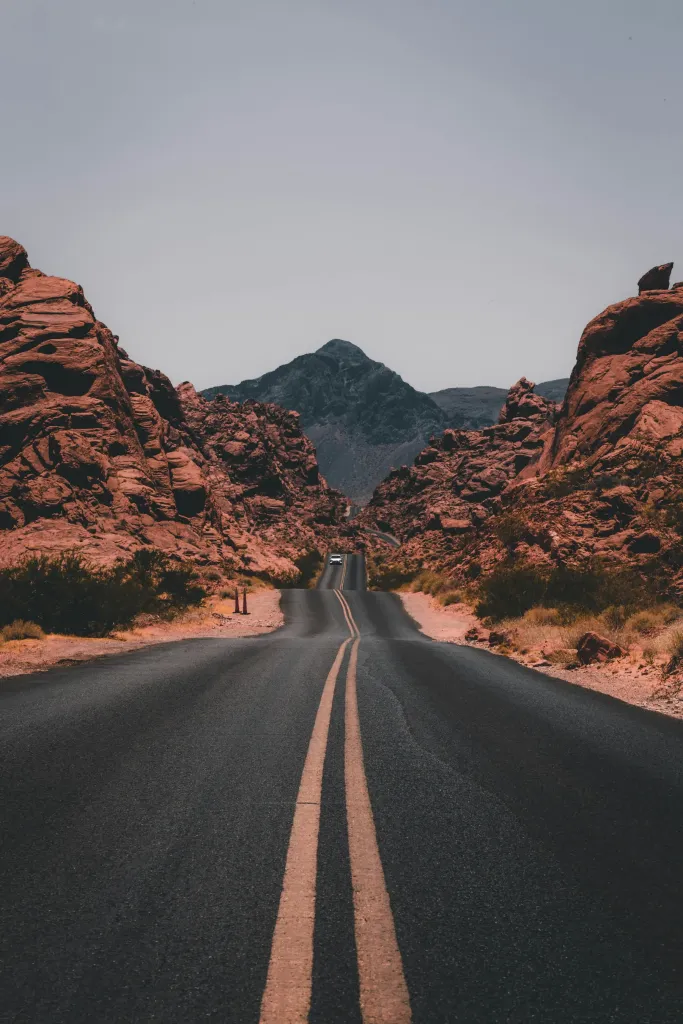
Capitol Reef, where I finally slowed down
If you only remember one thing from this post, let it be this: give Capitol Reef two nights. Most loop itineraries treat it as a drive-through between Moab and Bryce, and that is a mistake. The Fruita historic district sits in a green valley of orchards planted by Mormon settlers, with mule deer grazing between the apple trees and the Fremont River running past the campground.
The hikes are short and generous. Hickman Bridge is a 1.8-mile round trip to a natural bridge; Cassidy Arch is steeper, about 3.4 miles, and ends on top of the arch rather than beneath it. On my rest day I did neither. I drove the Scenic Drive to the end of the pavement, walked the Capitol Gorge wash past the old pioneer register, and bought a small fruit pie from the Gifford Homestead before they sold out, which they do by early afternoon.
Capitol Reef taught me that a national park can be a place you rest in, not just a place you conquer.
Maya Collins
Capitol Reef is also a certified International Dark Sky Park. On my second night I lay on the van roof with a sleeping bag until midnight and watched the Milky Way rise over the reef so clearly it threw a faint shadow on the sandstone.

Byway 12 and the hoodoos of Bryce
Scenic Byway 12 between Torrey and Bryce is about 120 miles, and you should budget a full day for it. It climbs over Boulder Mountain through golden aspen in early October, drops into the tiny town of Boulder, then crosses the Hogsback, a narrow ridge with steep drops on both sides that is genuinely thrilling in a tall van. I stopped for the Lower Calf Creek Falls trail, a sandy six-mile round trip that ends at a 126-foot waterfall pouring into a cold green pool.
Bryce Canyon sits at 8,000 to 9,000 feet, and the temperature drop surprised me. The first morning was 24°F at Sunrise Point. Worth it. The amphitheater fills with low light and the hoodoos go from grey to coral to almost pink in about fifteen minutes. Afterward I walked the Queen’s Garden and Navajo Loop combination, about three miles, down among the formations and back up the switchbacks of Wall Street.
The next day I did the eight-mile Fairyland Loop, and I passed maybe a dozen people in four hours. If you have one long day in Bryce, that is the hike.
Zion, last and loudest
Zion is the most visited park of the five and it feels like it. From spring through fall, the Zion Canyon Scenic Drive is closed to private cars and you ride the free park shuttle from the visitor center. I parked in Springdale and walked over at 6:45 a.m. to be near the front of the line.
I did not have an Angels Landing permit. They are awarded by lottery on Recreation.gov, and I’d missed the seasonal window. Instead I hiked the Emerald Pools, walked the Pa’rus Trail at sunset, and drove east through the tunnel for the short Canyon Overlook Trail, which gives you a big view for one mile of effort. On my final morning I rented a dry suit and canyoneering shoes in Springdale, about $55, and waded the first two miles of the Narrows in 55°F water. In October, do not skip the gear.

What twelve days actually cost
Having a free van was the big advantage, so take my numbers with that in mind. Campsites in the parks ran about $20 to $30 a night, and I mixed in free dispersed camping on Bureau of Land Management land outside Moab. Gas for roughly 1,050 miles in a thirsty van was the biggest single expense.
Trip budget
What the loop cost me
- Campsites$24021%
- Food & groceries$36031%
- Gas$33029%
- Park pass & permits$958%
- Gear rental & extras$12010%
Flights not included; the van was borrowed. Add about $700–$900 for a 12-day rental car or $1,500+ for a campervan.
Before you go
- Buy the America the Beautiful annual pass for $80. Five parks at $30–$35 each makes it an easy win.
- Campsites at Devils Garden, Fruita, Bryce and Watchman open on Recreation.gov up to six months ahead and fill fast for fall weekends.
- Check the Arches timed-entry dates and the Angels Landing lottery calendar on nps.gov before you lock in dates.
- Fill your tank in Green River, Torrey and Panguitch. Services between them are thin.
When to go, and what I’d change
Late September through mid-October is the sweet spot: highs in the 70s in Moab and Zion, cool nights, fall color on Boulder Mountain. Late April to early June is the other good window, with longer days but more school-break crowds. Summer is brutally hot in the lower parks, and winter brings snow and road closures at Bryce.
What I’d change is small. I’d add a day in Canyonlands to drive the Needles district, and I’d enter the Angels Landing lottery the moment it opened. Everything else, including the long lazy afternoon in an orchard, I’d do exactly the same.
Somewhere on I-15 heading home, with the last peach gone and red dust in every seam of my backpack, I started planning the version where I come back in spring. That’s how you know a loop worked.