
Planning used to eat my evenings for a month. I’d open forty browser tabs, read six blogs about the same neighborhood, compare two nearly identical hotels until midnight, and still arrive somewhere without knowing how to get from the airport into town. When I was teaching in Denver, that month of half-planning happened every spring before summer break, and by the time I left I was tired of a trip I hadn’t taken yet.
Now I give it one weekend. A big paper map, a notebook, a pot of coffee and a strict list of what actually has to be decided early. Everything else waits until I’m there. I’ve planned trips to Portugal, Japan, Peru and the American Southwest this way, and not one of them has fallen apart because I didn’t plan enough.
Here is the system, block by block, using the ten-day Portugal trip I planned last spring as the example.
In this story8 sections
- Friday night: the only three questions that matter
- Saturday morning: flights set the frame
- Saturday afternoon: a route on paper
- Sunday morning: a budget I’ll actually follow
- My Portugal plan, on paper
- Sunday afternoon: the bookings that can’t wait
- The boring checks that save trips
- What I deliberately leave unplanned
Friday night: the only three questions that matter
Before the weekend starts, I answer three questions on one page of a notebook. Not in a spreadsheet, not in an app. On paper, where I can’t fiddle with formatting.
- What is this trip for? Rest, food, hiking, a city, a person? Portugal was for food, coastline and long walks. That one line ruled out a lot.
- How many real days do I have? Not calendar days. Subtract the travel days. Ten days off from Denver meant eight usable days on the ground.
- What is my total number? One figure for everything, flights included. Mine was $3,200.
Then I close the notebook and go to bed. It sounds trivial, but writing those answers down the night before stops me from waking up on Saturday and spending the whole morning on inspiration instead of decisions.

Saturday morning: flights set the frame
I start with flights because they’re the least flexible and most expensive moving part. I use Google Flights’ calendar view to scan a whole month of fares from my home airport at once, then check the two or three cheapest date pairs directly on the airline sites.
The trick I’d pass on to anyone: price open-jaw tickets, flying into one city and out of another. For Portugal, flying Denver to Lisbon and home from Porto cost about $90 more than a simple round trip, but it saved a full day of backtracking. That’s almost always worth it.
I give myself a hard deadline of noon. If I find a fare within about 10 percent of the lowest I’ve seen, I book it. Waiting for a perfect fare is how planning turns back into a month.
Good to know
Most US airlines let you cancel within 24 hours of booking for a full refund if you bought at least a week before departure. I book the flight Saturday morning and use that window as a safety net while I sketch the route.
Saturday afternoon: a route on paper
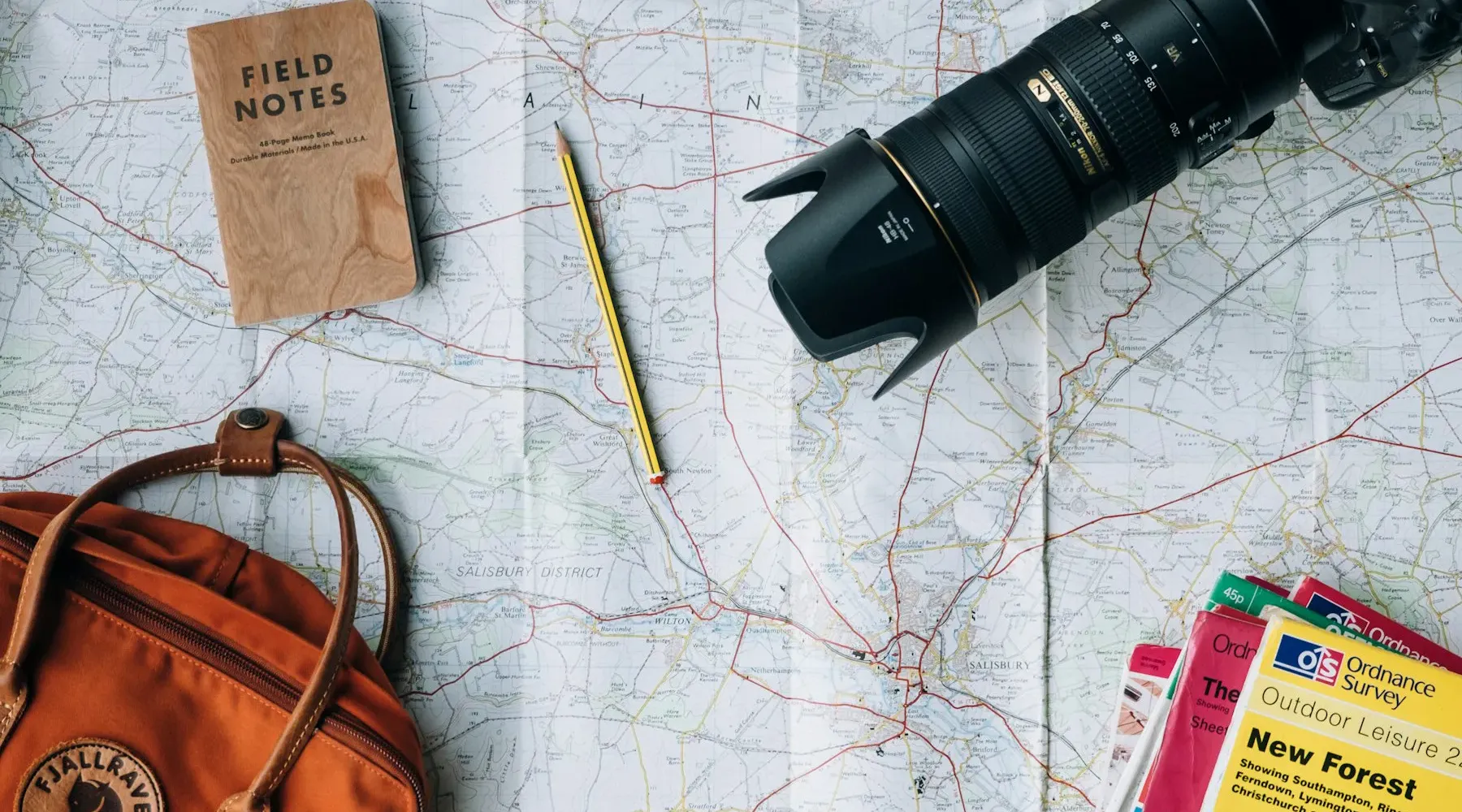
This is my favorite part. I unfold a real map on the kitchen table and mark three things: where I land, where I leave, and the two or three places I’d be heartbroken to miss. Then I connect them with the simplest line I can.
My rule is no more than one base per three nights. For eight usable days in Portugal that meant three bases: Lisbon for three nights, the Alentejo coast for two, Porto for three. Every time I’ve ignored this rule and moved every night, I’ve regretted it. Packing and unpacking eats half a day, and the trip turns into a series of check-in desks.
For each base, I write down how I’ll get there and roughly how long it takes. Train? Bus? Rental car? If a leg takes more than four hours, I either cut a stop or turn the travel day into part of the trip with a good lunch in the middle.
A trip doesn’t need more planning. It needs the right planning, done early, and then left alone.
Maya Collins
Sunday morning: a budget I’ll actually follow
With flights and bases fixed, I can build a realistic budget in about an hour. I take the total from Friday night, subtract the flight, and split the rest across five buckets: stay, food, transport, activities and a buffer. I look up a few real prices for each base, like a mid-range room, a dinner, a train ticket, and multiply. No guessing from vague memories of what things cost five years ago.
Here is what the Portugal plan looked like on the ground. It ended up within $70 of the real spending.
Trip budget
My Portugal plan, on paper
- Stay$1,05050%
- Food$48023%
- Transport$24011%
- Activities$1708%
- Buffer$1507%
Round-trip open-jaw flight from Denver, about $1,050, not included.
The buffer is the bucket people skip. Mine covers the taxi when a train is canceled, the extra night when I fall in love with a town, the jacket I forgot. If it’s still there at the end, that’s my favorite dinner of the trip.
Sunday afternoon: the bookings that can’t wait
Here’s the heart of it. Most things don’t need booking in advance, but a few absolutely do, and missing them is what ruins trips. Before Sunday dinner, I book only these:
- The first and last night. Arriving jet-lagged with nowhere to sleep is miserable, and missing a flight home because you were an hour away is worse.
- Anything with limited permits or timed tickets. Machu Picchu entry, Angels Landing, the Alhambra, popular museums. Write down the date each one opens if it isn’t open yet.
- Rental cars in high season. Prices climb sharply as the date approaches, especially for automatics in Europe.
- Anything in a place with very few beds. For me, that was two nights in a small coastal village with only a handful of guesthouses.
Everything else, the middle nights in big cities, restaurants, day trips, stays open. I book those a few days ahead once I’m traveling and know how I feel.

The boring checks that save trips
The last hour of the weekend goes to paperwork. It’s dull and it’s the most important hour of all.
- Passport validity. Many countries want at least six months left; Europe’s Schengen area requires at least three months beyond your departure date. US passport renewals can take weeks, so check now.
- Entry rules on the State Department’s travel.state.gov country pages, including any electronic travel authorization you need before you fly.
- A travel credit card with no foreign transaction fees, and a heads-up to my bank.
- Travel insurance, bought soon after the flight so cancellation coverage kicks in early.
- Offline maps downloaded for every base, and a photo of my passport saved somewhere I can reach without Wi-Fi.

What I deliberately leave unplanned
By Sunday night, my notebook holds dates, three bases, a budget, four or five confirmations and a short list of deadlines. That’s it. I don’t build hour-by-hour days. I don’t book restaurants three months out unless it’s a place I’m traveling specifically for. I keep a short list of maybe ten ideas per base and choose once I’m there.
The empty space is the point. In Portugal, an unplanned afternoon turned into a four-hour lunch in a fishing town with a family who insisted I try every dessert they made. No planning weekend would have produced that. But the planning weekend is why I had the free afternoon at all.
So pick a weekend, buy a map and make the coffee strong. By Sunday night, the hard part is done, and the only thing left to do is look forward to it.