
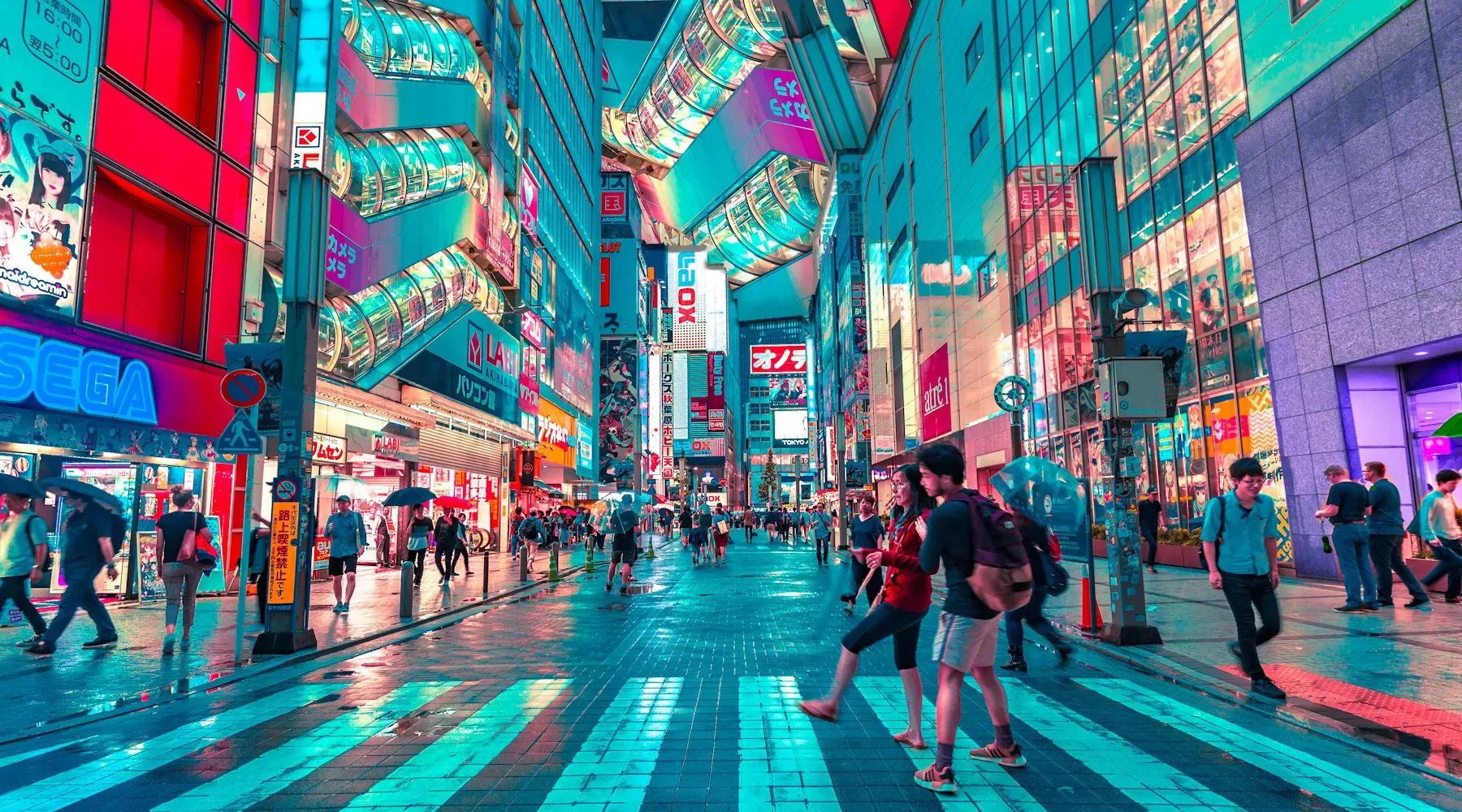
Our first night in Tokyo, jet-lagged and wide awake at 10:00 PM, Jess and I walked out of our hotel in Shinjuku expecting to find a quiet street and a convenience store. Instead we found a river of people under a sky of signs, a man in a suit carefully parking a bicycle, a line of twenty for a ramen counter, and an alley so narrow and smoky we could smell grilled chicken from half a block away. Nobody was rushing. Nobody was loud. It was the most crowded calm place I’d ever been.
Tokyo after dark is one of the great experiences in travel, and it’s also overwhelming the first time. The city is enormous, and every neighborhood has a different personality at night. We spent five evenings exploring before heading south to Kyoto, and these are the neighborhoods, the habits and the small lessons I’d pass on to any first-timer.
In this story7 sections
Shinjuku: the big, bright beginning
If you only have one night, spend it in Shinjuku. East of the station is the Tokyo of the movies: massive screens, karaoke towers, department stores open late, and the giant 3D cat billboard that draws a crowd every time it yawns.
The heart of a Shinjuku night, though, is in the alleys. Omoide Yokocho, beside the west exit, is a cluster of tiny counters serving yakitori and beer under paper lanterns. Many places seat six to ten people, so look for an open stool, point at what the person next to you is eating, and don’t linger for hours when people are waiting.
A ten-minute walk away, Golden Gai is a few blocks of more than two hundred tiny bars, many with their own theme and a handful of seats. Some welcome visitors with signs in English; a few are for regulars only. Expect a cover charge of about ¥500 to ¥1,000 (roughly $3.50 to $7) on top of drinks, and treat it as the price of a seat in someone’s living room.

Good to know
- Many izakaya add a small seating charge called otōshi, usually ¥300 to ¥600, which comes with a little starter dish. It isn’t a scam.
- Tipping isn’t expected anywhere in Japan and can cause confusion.
- Last trains run roughly between midnight and 12:30 AM. After that, it’s a taxi, which gets expensive fast.
- Smoking is still allowed in some small bars. If that bothers you, check before you sit down.
Shibuya: the crossing, and then the side streets
Yes, you should stand at the Shibuya Scramble at least once. Up to a few thousand people cross at once when the lights change, and watching it from above is hypnotic. We booked a sunset slot at Shibuya Sky, the open-air rooftop observation deck, about two weeks ahead and stayed through dark, watching the city light up block by block. Tickets were about $20 each, and the sunset slots sell out first.
After the crossing, walk away from it. Nonbei Yokocho, a short lane of tiny bars along the train tracks, felt like a smaller and friendlier Golden Gai. Up the hill toward Okushibuya, the streets fill with small restaurants, record shops and coffee bars where we had some of our best meals of the trip without a single reservation.
Shimokitazawa: the night we liked best
Shimokitazawa, just a few minutes from Shibuya on the Keio Inokashira Line, is where we’d send any friend who says Tokyo sounds too big. It’s a neighborhood of low buildings, vintage clothing stores, tiny live-music venues and curry shops, and in the evening it feels like a college town that grew up and got good taste.
We spent a whole evening there without a plan. Thrift stores stay open until about 8:00 PM, then the small bars and bistros take over. We had a bowl of soup curry, ended up in a basement listening to a jazz trio, and walked back along the old rail line, now a long pedestrian strip of cafés and shops.
Tokyo at night is the most crowded calm place I have ever been.
Maya Collins
Three more evenings worth planning
Asakusa after the crowds
Sensō-ji, Tokyo’s oldest temple, is packed by day. By 8:00 PM, the shops of Nakamise Street have closed their shutters and the main hall is softly lit, with only a few people around. It’s free to walk the grounds at night, and the view of the Tokyo Skytree glowing above the pagoda is unforgettable.
Ebisu for dinner
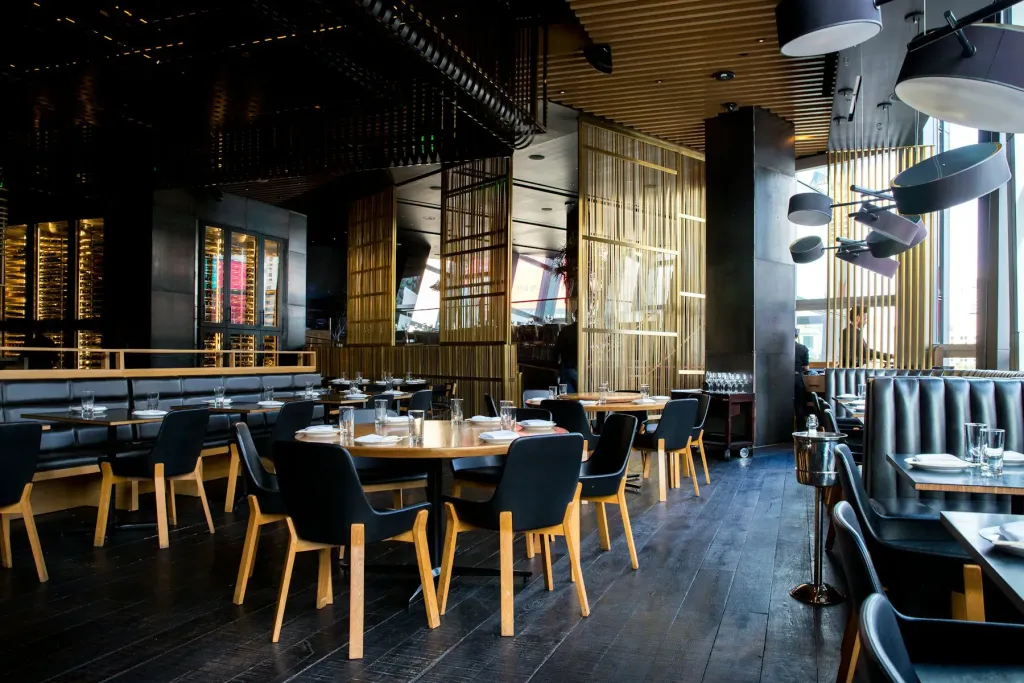
Ebisu felt more grown-up than Shibuya, with wine bars and quiet restaurants. Ebisu Yokocho, an indoor food alley of small counters, gets lively after 7:00 PM and is a great place for a first-timer to try a few dishes without committing to a full meal.
Koenji or Nakameguro for something low-key
Koenji, west of Shinjuku on the JR Chuo Line, has a scruffy, creative energy with secondhand shops and standing bars. Nakameguro is calmer, with restaurants along a canal that’s famous in cherry blossom season and lovely the rest of the year.
Our five nights, mapped
We stayed in Shinjuku and treated every evening like a small expedition, starting around sunset and heading back on one of the last trains.
Itinerary
Five Tokyo evenings
- 5 days
- 13 places
- $245 on the ground
Day 1
Shinjuku alleys
- Omoide Yokocho
- Golden Gai
Yakitori at a counter by the station, then two tiny bars in Golden Gai with cover charges.
Day 2
Shibuya from above
- Shibuya Sky
- Scramble Crossing
- Nonbei Yokocho
Booked a sunset slot at Shibuya Sky, then dinner in the side streets toward Okushibuya.
Day 3
Shimokitazawa
- Vintage shops
- live music
- soup curry
No plan at all. The best night of the five.
Day 4
Asakusa by lantern light
- Sensō-ji
- Nakamise Street
- Sumida River
Temple grounds after the shops close, then a walk along the river with Skytree views.
Day 5
Ebisu
- Ebisu Yokocho
- Ebisu Garden Place
A slow last dinner of small plates, one per stall.
Estimated on-the-ground cost$245
Practical notes for a first night out
Getting around: We loaded a Suica card on our phones before landing, which works on trains, buses and at most convenience stores. Tokyo’s rail network is huge but very logical. Google Maps handles it well, including platform numbers.
Safety: Tokyo is one of the safest big cities in the world, and we never felt uneasy walking at midnight. The usual advice still applies in nightlife areas like Kabukicho in Shinjuku and Roppongi: ignore touts who try to pull you into bars, and avoid any place where you can’t see a price list.
Budget: Our evenings averaged about $50 each, including dinner, a couple of drinks and transport. Yakitori and beer at an alley counter can come in under $25; a cocktail bar in Ginza can cost that for a single drink.
Getting there: Nonstop flights reach Tokyo’s Haneda and Narita airports from Los Angeles, San Francisco, Seattle, Dallas, Chicago, New York and more. Haneda is much closer to the city, about 30 minutes by train or monorail. US passport holders don’t need a visa for a short tourist visit.
When to go: Autumn and spring are the most comfortable seasons for long evenings outside. Summer nights are hot and humid, often well above 80°F even after dark.
Our mistake
On night one, we tried to see Shinjuku, Shibuya and Harajuku in a single evening. It was a blur of train platforms. One neighborhood per night is plenty, and it lets you actually sit down somewhere.
On our last night we went back to the same alley counter in Shinjuku where we’d started. The cook remembered us, or pretended to, and slid over two skewers we hadn’t ordered. That’s Tokyo after dark for me: enormous and anonymous for a minute, then suddenly very small and kind. Go out, pick one neighborhood, and let it surprise you.