
Every morning in Ubud began the same way. Around 6:15 the roosters started, then the scooters, then a soft clatter from the family temple next door as the grandmother of my guesthouse laid out the day’s offerings: small palm-leaf trays of flowers, rice and a stick of incense, placed on steps, on the dashboard of the family car and, once, on my doorstep. By 7 I was on the porch with a glass of strong Balinese coffee, watching the light come through the palms. I had no plan for the day. That was the plan.
I gave Bali a full month. Not a checklist of temples and beach clubs, not a sprint between Instagram swings, just a slow month with a base in Ubud and a handful of long drives north and east. People had warned me that Bali was overrun, and in a few places it is. But the island I found when I slowed down was gentle, deeply spiritual and endlessly green.
This is what a month of not rushing taught me, and how you might do the same, even if you only have two weeks.
In this story6 sections
Why Ubud works as a base
Ubud sits in the hills of central Bali, about an hour and a half from the airport in decent traffic, which is never guaranteed. It is the island’s cultural heart, full of artists, dance performances, yoga studios and very good cafés, and it is central enough that most of the island is a day trip away.
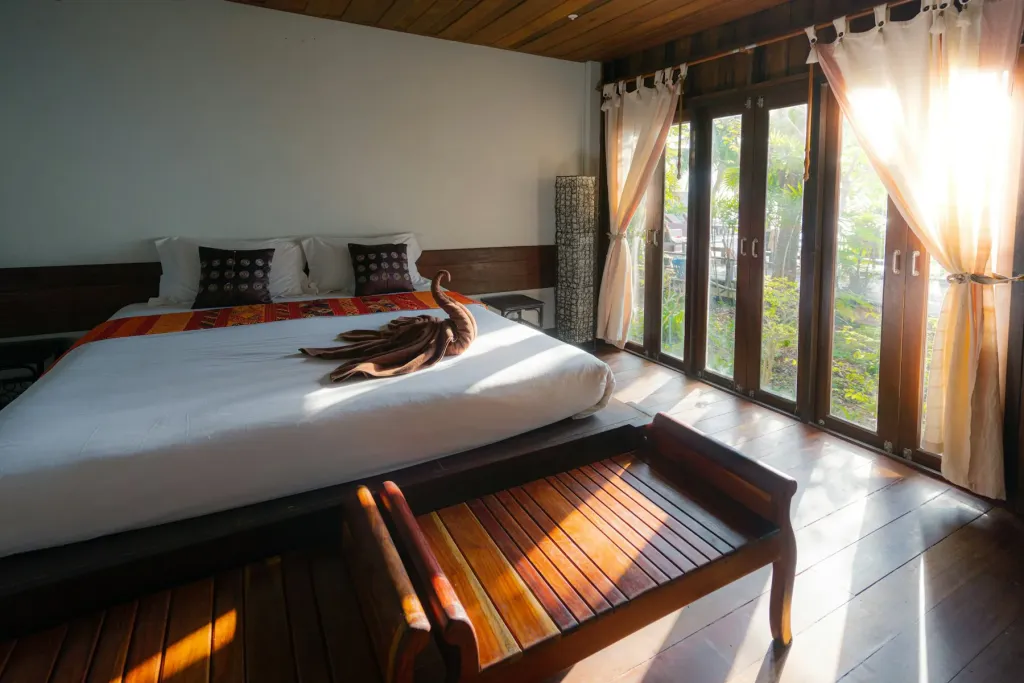
I rented a room in a family compound on the edge of town for about $30 a night, with breakfast of banana pancakes and fruit on the porch and the sound of the river below. Monthly rates are often negotiable if you ask the family directly after a few nights. Staying slightly outside the center meant quiet nights and a 15-minute walk into town past rice paddies, which beat any hotel pool.
A slow Ubud morning
- Walk the Campuhan Ridge path at sunrise, before the heat and the crowds. It is about a mile along a grassy ridge between two river valleys.
- Find a café for a long breakfast. Ubud does smoothie bowls, tempeh, fresh juices and excellent local coffee as well as anywhere on earth.
- Visit the Ubud Art Market or the palace in the late morning, or don’t.
- Retreat during the hottest hours with a book, a massage (often $10 to $15 for an hour) or a nap.
Temples, and how to visit them well
Bali is a Hindu island in the world’s largest Muslim-majority country, and religion is woven into daily life. There are thousands of temples, from tiny household shrines to grand complexes. Visiting them is a privilege, and a little preparation goes a long way.
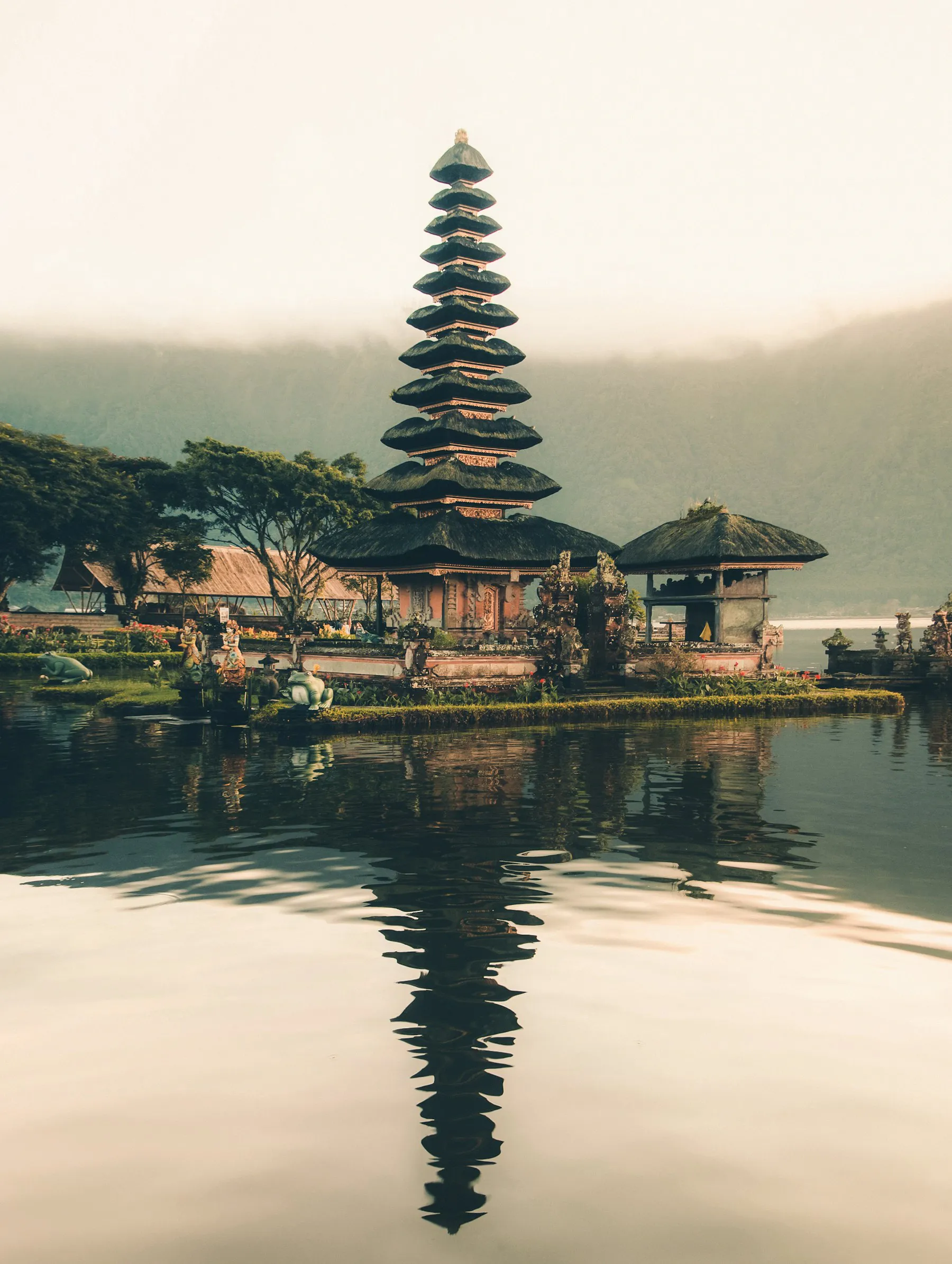
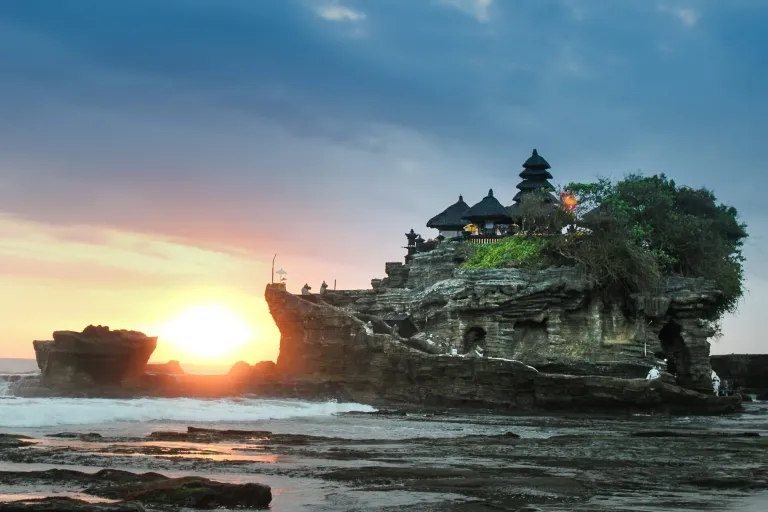
My favorites were the ones I visited slowly. At Tirta Empul, the water temple near Tampaksiring, I watched Balinese families move through the purification pools, bowing under each spout in turn. Pura Ulun Danu Bratan, on the shore of Lake Bratan in the cool highlands, seemed to float on the water in the early mist. And Tanah Lot, the sea temple on its rocky outcrop, is undeniably crowded at sunset, but I still found it moving to watch the tide come in and cut it off from the shore.
Good to know
- Wear a sarong and sash at temples. Most larger temples lend or rent them at the entrance, but buying your own for a few dollars is easier.
- Cover your shoulders, and never climb on shrines or walls.
- Women who are menstruating are traditionally asked not to enter temple grounds. Signs at the entrance explain it.
- Don’t step on offerings on the ground. Walk around them.

Rice terraces beyond Tegallalang
The Tegallalang terraces north of Ubud are the famous ones, and they are beautiful, but they are also lined with paid swings, photo platforms and vendors. Go at 7 a.m. if you go.
The rice terraces that stayed with me were at Jatiluwih, in the central highlands about an hour and a half from Ubud. They are part of a UNESCO-listed landscape that recognizes subak, Bali’s ancient cooperative irrigation system, where water is shared between farms through channels and temples. I paid a small entry fee and walked one of the marked loops for two hours, mostly alone, through terraces stepping down the hills in every shade of green. A farmer in a conical hat waved me over to show me how the water gates work. I understood about a third of it, and it was still the best lesson of the trip.
I came for a checklist and left with a rhythm. Bali is generous to people who stop counting.
Maya Collins
Long drives to the north
I don’t ride scooters, and Bali’s traffic is not where I wanted to learn. Instead, I hired a driver for my longer trips. Through my guesthouse, a full day with a car and a driver cost about $45 to $55, and my driver, a soft-spoken father of three, became a friend and an excellent unofficial guide.
The road north climbs through clove and coffee plantations into the misty highlands around Bedugul and Munduk, where the air is cool enough for a sweater. I spent three nights in Munduk at a simple lodge, hiking to waterfalls in the mornings and watching clouds slide over the twin lakes of Buyan and Tamblingan. Further north, the black-sand coast around Lovina is quiet and old-fashioned, with calm water and fishing boats. A different trip took me east to Sidemen, a valley of rice fields and weaving villages under the shadow of Mount Agung, which I would choose over Ubud for a quieter base next time.
I also did the classic pre-dawn hike up Mount Batur, an active volcano. We started walking at 4 a.m. by headlamp and reached the rim, at about 5,600 feet, in time to watch the sun rise over Lake Batur and Mount Agung. It is touristy and the summit is crowded, but the view is real. Book with a local guide; the trail can be steep and loose in places.

Making a slow Bali month work
- Getting there: There are no nonstop flights from the US. Most travelers connect through hubs such as Tokyo, Seoul, Taipei, Singapore or Doha. From Los Angeles, plan on 20 to 24 hours of travel.
- Entry: US citizens can get a visa on arrival for about $32, valid for 30 days and extendable once for another 30 through an immigration agent or the official online system. There is also a separate tourist levy of about $10 per visitor, payable online before you arrive.
- When to go: The dry season runs roughly April through October, with July and August the busiest months. The wet season brings short heavy downpours, greener landscapes and fewer people. Temperatures are in the mid-80s °F year-round, cooler in the highlands.
- Money: The Indonesian rupiah has a lot of zeros. At the time of my trip, about 15,000 to 16,000 rupiah equaled $1. Use bank ATMs, not standalone machines.
- Monthly budget: I spent roughly $1,600 for the month, not counting flights, including lodging, food, drivers, massages, temple fees and a cooking class.
Before you go
Check whether your dates overlap Nyepi, Bali’s Day of Silence, usually in March. For 24 hours the whole island shuts down: no flights, no traffic, no lights after dark, and visitors must stay inside their hotel. I would love to experience it someday. It just needs to be on purpose.
Destination guide · Indonesia
Bali
Temples, rice terraces and surf towns
- Best time to visit
- April to October (dry season)
- Daily budget
- Budget-friendly
- Visa for US citizens
- Visa on arrival, 30 days ($35)
- Language
- Indonesian, Balinese
- Currency
- Indonesian rupiah (IDR)
- Time zone
- Asia/Makassar
On my last morning in Ubud, the grandmother next door handed me a small offering of frangipani and rice to place on the step myself. I set it down carefully and lit the incense, and for a minute I didn’t think about flights or bags at all. Go slowly. Bali will meet you there.