

It was 8°F (about -13°C) when I zipped the tent door, and my eyelashes had frozen into little stiff brushes. Outside, the snow on the Wapta Icefield glowed faintly blue under starlight alone. No moon, no town glow, no sound except the occasional creak of the glacier and my friend Leah, in the next sleeping bag, saying “I can’t feel my nose and I don’t care” for the third time.
We had skied up from Bow Lake in Banff National Park that day, past the Alpine Club hut most groups stop at, and set up camp on the broad white shoulder above it, just over 9,000 feet. The plan was simple: one night, one tent, a stove, too much hot chocolate, and the darkest sky either of us had ever slept under.
It was hard, cold and, honestly, a little scary. It was also the most beautiful night of my life. This is what it took, what I would do differently and why you should not try it the way we almost did.
In this story7 sections
Why the icefield, and why we hired a guide
Most winter camping in Banff happens at designated backcountry campgrounds at lower elevations, which is a fine way to start. We wanted the high, open snowfields of the Wapta for one reason: nothing between us and the horizon. Above treeline on a glacier, the whole dome of the sky is yours.
That same openness comes with real risks. The approach from Bow Lake climbs through a narrow canyon and below slopes that can slide, and the icefield itself has crevasses hidden under winter snow. Leah and I both have avalanche training and years of winter hiking, but neither of us is a glacier traveler. We hired a certified mountain guide for the two days, which cost about $450 each. It was the best money we spent, and not only for safety: she taught us more about snow in 48 hours than I had learned in ten Colorado winters.
Before you go
- Overnight trips in Banff need a Parks Canada wilderness pass in addition to the park entry pass. Rules about where you may camp change, so confirm with the park before you go.
- Check the Avalanche Canada forecast every day, and do not cross avalanche terrain without training, a beacon, a probe and a shovel.
- US citizens need a valid passport to enter Canada. Prices on the ground are in Canadian dollars.
Picking the night: moon, weather and the winter Milky Way
We planned the trip around the new moon in early March. Even a half moon on fresh snow is bright enough to read by, which is lovely, but it washes out all but the brightest stars. With no moon, the snow becomes a dark gray floor and the sky does all the work.
Here is something nobody told me: the dramatic, glowing core of the Milky Way you see in summer photos is not visible on winter evenings. In winter you look toward the outer edge of our galaxy, so the band is fainter and thinner, running through Cassiopeia, Perseus and past Orion. On a truly dark night at altitude, though, it is still unmistakable, a pale river crossing the whole sky from one horizon to the other. Ours rose straight out of the black outline of the peaks to the north.
Then there is the weather. We had a three-day window with a strong high-pressure system, cold but calm. Wind is what makes winter camping dangerous and miserable; a still night at 8°F is far more comfortable than a breezy one at 25°F. We were willing to cancel right up to the morning we left, and our guide made it clear she would turn us around if the forecast changed.
A day on skis, a night on the ice
We left the Bow Lake trailhead, off the Icefields Parkway about 25 miles north of Lake Louise, at 8 a.m. Crossing the frozen lake on skins was flat and easy. The canyon above it was not: narrow, steep in places, and somewhere you move quickly and spread out. We reached the hut area around noon, ate lunch in the sun, and then climbed another 1,300 feet or so onto the icefield, roped up, to a flat spot our guide had picked out.
Setting up camp in deep cold is all about order. Stamp out a platform with skis, let it set for 20 minutes, pitch the tent, bury the anchors as deadmen, dig a little cooking pit. Then start melting snow, which takes much longer than you think. We spent nearly two hours that evening just making water for dinner, breakfast and our bottles.
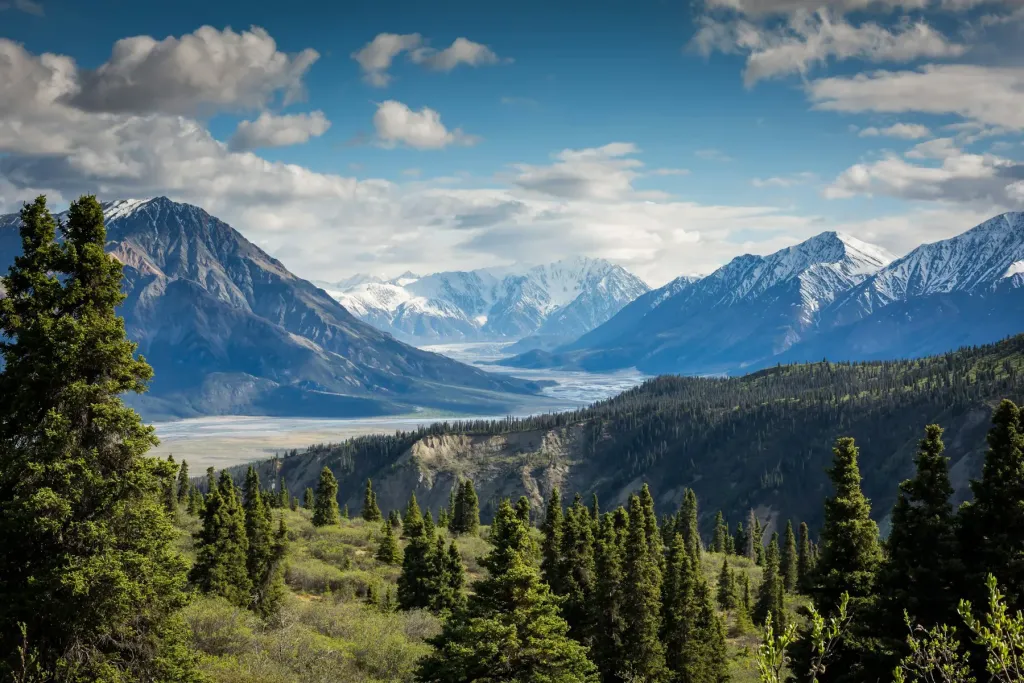
The sun dropped behind the peaks around 6:15 p.m., and the cold came in like a door closing. By 7:30 it was fully dark, and by 8 the sky had gone from busy to overwhelming. I lay on my back on my sleeping pad outside the tent, in every layer I owned, and simply stared. Satellites slid across the sky every few minutes. The Milky Way stretched over the summits. I saw more shooting stars in an hour than I had in the previous year.
At 8 p.m. the sky went from busy to overwhelming, and I forgot for a full hour that I was cold.
Maya Collins
How we stayed (mostly) warm
Our sleeping bags were rated to 0°F, and we slept on two pads each, a closed-cell foam pad under an insulated inflatable one. The ground steals more heat than the air does, so do not skimp on what is under you.
- Hot water bottle in a sock. A hard-sided bottle filled with boiling water, wrapped in a wool sock and tucked between your thighs, is the single best trick I know.
- Boot liners in the bag. Frozen liners in the morning are misery. Ours went in a stuff sack at our feet.
- Eat before bed. A big, fatty dinner and a handful of nuts right before sleep keep the furnace going.
- Do not breathe into your bag. The moisture freezes into the insulation. Keep your face out and wear a balaclava.
- Batteries close to your body. My phone died within an hour in a jacket pocket and came back to life inside my bag.
What I packed for one night on the icefield
The guide supplied the rope, glacier gear and tent; this was my own kit.
0 of 21 packed— ready to go!
Planning your own trip
Fly into Calgary, which has nonstop service from many US hubs, including Denver, Chicago, Dallas, Seattle and Los Angeles. From the airport it is about two hours to Lake Louise and another half hour north on the Icefields Parkway to Bow Lake. The parkway can close in storms, so keep your schedule loose.
February and March offer the best balance of daylight, stable snowpack and cold, clear nights. Base yourself in Lake Louise the night before, so you can start early and check the avalanche forecast over breakfast. If the icefield sounds like too much, a night at a lower-elevation backcountry campground or a groomed winter campground in the park still gives you remarkable skies, especially away from the Banff townsite.
Destination guide · Canada
Banff
Turquoise lakes and big Rockies
- Best time to visit
- June to September; December to March for skiing
- Daily budget
- Pricey
- Visa for US citizens
- eTA not needed by land; passport required
- Language
- English, French
- Currency
- Canadian dollar (CAD)
- Time zone
- America/Edmonton
Our mistake
We packed canister fuel and our stove sputtered at dawn. In real cold, canisters lose pressure; keep one in your sleeping bag overnight, or use a stove designed for winter or liquid fuel.

We woke at 6:30 to a sky going pale blue, then pink, then gold over a sea of clouds filling the valleys below. Our water bottles were frozen solid and my fingers ached for an hour. Leah turned to me with ice on her balaclava and said, “Same time next year?” I said yes before she finished the question.