
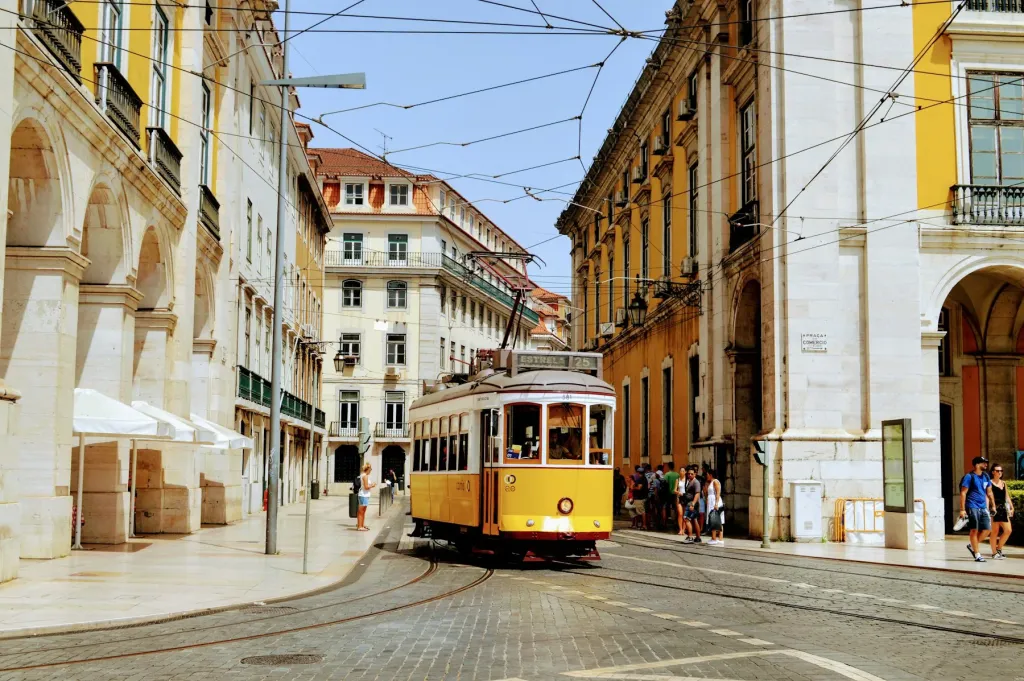
The first sound we heard in Lisbon was a tram bell. Then the grind of steel wheels on a hill that seemed too steep for anything on rails, then someone laughing in a doorway, then the clink of tiny coffee cups. We had dropped our bags in Alfama, walked uphill for five minutes, and were already out of breath, holding warm custard tarts and looking over a sea of terracotta roofs toward the river.
Lisbon has become our favorite European capital, and three days is just enough to fall for it. Jess and I have now been twice, once in spring and once in early October, and we’ve refined our 72 hours into a plan that balances the big sights with long lunches, slow viewpoints and one unmissable day trip. Bring good shoes. The city is built on seven hills, and you will feel all of them.
In this story7 sections
Day one: Alfama, Graça and the viewpoints
Start in the oldest part of the city. Alfama is a maze of stairways, laundry lines and tiny squares that survived the great earthquake of 1755, and it’s at its best in the morning, before the tour groups climb up. We wandered without a map, stopping at the Miradouro de Santa Luzia, with its tiled walls and bougainvillea, and the neighboring Portas do Sol terrace for coffee.
Climb on to the Castelo de São Jorge if you love history and big views; tickets are around $17, and the line is shortest at opening. Then cross over to Graça for the two best viewpoints in the city: Miradouro da Graça, shaded by pines with a small kiosk café, and the higher Miradouro da Senhora do Monte, which looks straight across to the castle. We came back to the second one at sunset and it was worth every stair.
In the evening, walk back down to Alfama for fado, Portugal’s melancholy folk music. Many small restaurants host singers in the evening. Expect to pay for dinner (and sometimes a minimum spend), keep quiet while they sing, and don’t be surprised if it moves you.

About tram 28
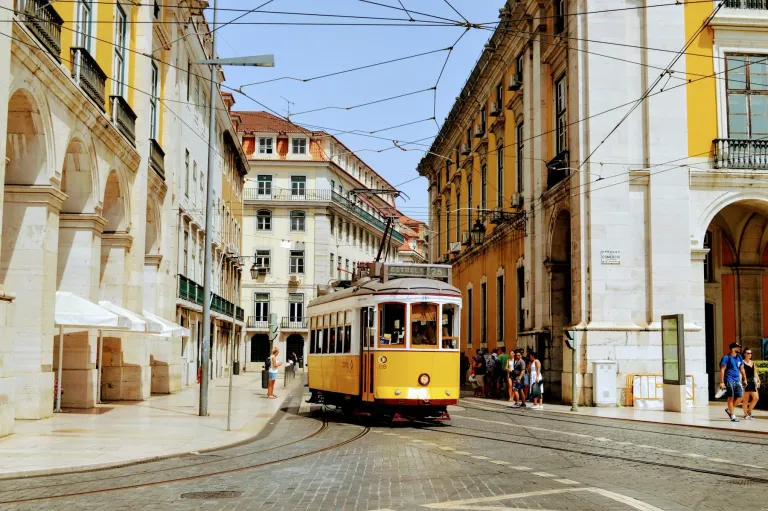
The famous yellow Tram 28 runs from Martim Moniz through Graça, Alfama, Baixa and Estrela, and it’s a lovely ride. It’s also often packed and a hotspot for pickpockets. Our trick was to board at the Martim Moniz end early in the morning, when we could get a seat, or ride the quieter Tram 12, which loops through the same hills in a shorter circuit.
Good to know
- Get a Viva Viagem card or just tap a contactless bank card on the metro. A 24-hour pass covering metro, buses, trams and funiculars costs around $8.
- Lisbon’s sidewalks are polished limestone and very slippery when wet. Leave the smooth-soled shoes at home.
- Dinner starts late. Most locals sit down around 8:00 or 8:30 PM.
Day two: Baixa, Belém and the custard tart question
Morning is for the elegant, flat grid of the Baixa, rebuilt after the earthquake. Walk down Rua Augusta through the triumphal arch to the huge riverside square, Praça do Comércio, and then take the tram or train west to Belém, about 20 minutes away.
Belém is where Portugal’s age of exploration is written in stone. The Jerónimos Monastery is breathtaking, with its carved cloister that looks like lace (book a timed ticket online to skip the worst of the line, and note it closes on Mondays). Walk down to the river to see the Monument to the Discoveries and the small, fairytale Belém Tower.
Then the important part. The famous bakery in Belém has been making pastéis de Belém since the 1830s from a secret recipe, and the line can stretch down the block. Our advice: skip the takeaway line and go inside, where the rooms are huge and table service moves quickly. Order at least two each, warm, with cinnamon and powdered sugar. Over three days we tried custard tarts from a dozen bakeries, and the honest truth is that many neighborhood pastelarias are almost as good for about $1.50 each.
In the late afternoon, head back toward the center via LX Factory, a former industrial complex now full of bookstores, design shops and restaurants, then end the day with a sunset drink in the Bairro Alto or along the waterfront at Cais do Sodré.
Lisbon is a city of hills, so we made a rule: a custard tart at every summit.
Maya Collins
Day three: Sintra, done the smart way
Sintra is a forested hill town about 40 minutes from Lisbon by train, scattered with palaces, castles and gardens that look like they belong in a storybook. It’s one of the most popular day trips in Europe, and it gets very crowded. These are the choices that made our second visit so much better than our first:
- Catch an early train. Trains leave from Rossio station roughly every 20 to 30 minutes, about $2.50 each way. Be on one by 8:00 AM.
- Book Pena Palace tickets ahead with a timed entry for opening time. Its red and yellow towers are Sintra’s most famous sight, and timed slots sell out on busy days.
- Use the 434 bus or walk. The tourist loop bus connects the station with the Moorish Castle and Pena Palace. The walk uphill through the forest takes about 45 minutes and is beautiful if you have energy.
- Do two big sights, not four. We chose Pena and Quinta da Regaleira, with its mysterious Initiation Well spiraling into the ground. Trying to add the Moorish Castle and Monserrate turned our first visit into a race.
Have lunch in the old town, buy a box of travesseiros, the local almond pastries, and catch the train back in time for a final dinner in Lisbon.

Our three days at a glance
Itinerary
Three days in Lisbon
- 3 days
- 9 places
- $230 on the ground
Day 1
Alfama and Graça
- Santa Luzia
- Castelo de São Jorge
- Senhora do Monte
Viewpoints by morning, castle at opening, sunset at Senhora do Monte and a fado dinner in Alfama.
Day 2
Baixa and Belém
- Praça do Comércio
- Jerónimos Monastery
- Belém Tower
- LX Factory
Timed ticket at Jerónimos, warm custard tarts in Belém, and a slow evening at LX Factory.
Day 3
Day trip to Sintra
- Pena Palace
- Quinta da Regaleira
Early train from Rossio, Pena at opening, Regaleira after lunch, back in Lisbon for dinner.
Estimated on-the-ground cost$230
Practical Lisbon
Getting there: Lisbon is one of the easiest European cities to reach from the US. Nonstop flights run from New York, Newark, Boston, Washington, Miami, Chicago, San Francisco and several other cities, many around seven hours from the East Coast. The airport is close to the center; the metro’s red line gets you downtown in about 25 minutes.
Entry: Portugal is in the Schengen area, so US citizens can visit for up to 90 days without a visa. Europe’s ETIAS travel authorization is expected to start applying to Americans, so check the official requirements a few weeks before you fly.
Where to stay: For a first visit, we like the Baixa or Chiado for flat streets and easy transport, or Alfama for atmosphere (with the stairs to match). Expect about $150 to $250 a night for a comfortable double in spring or fall.
When to go: April to June and September to October are perfect, with afternoons in the 70s. July and August are hot and crowded, and winter is mild but rainy.

Budget tip
Lunch is the best deal in town. Look for the prato do dia (dish of the day) chalked on a board outside small neighborhood restaurants, often around $12 to $15 with bread and a drink. We ate our big meal at lunch and kept dinners simple.
Destination guide · Portugal
Lisbon
Trams, tiles and custard tarts
- Best time to visit
- March to June, September to October
- Daily budget
- Moderate
- Visa for US citizens
- Visa-free up to 90 days (Schengen)
- Language
- Portuguese
- Currency
- Euro (EUR)
- Time zone
- Europe/Lisbon
Three days in Lisbon won’t show you everything, and that’s exactly why we keep going back. The city is generous with the people who slow down: the ones who sit an extra hour at a viewpoint, say yes to one more coffee, and let the tram bell, not the itinerary, set the pace. Pack the good shoes. You’ll earn every tart.