
The first thing I lost in Marrakech was my sense of direction. It went somewhere between a stall stacked with copper lanterns and a donkey cart that had every right to the alley and knew it. The second thing I lost was the idea that I needed a plan. By my third morning I was leaving the riad with nothing but a bottle of water, a few hundred dirhams and the vague intention of finding a bowl of something hot by noon.
The medina is about two square miles of walled old city, laced with lanes that narrow, fork, dead-end and double back. Map apps try their best, but the blue dot drifts and the alleys don’t always have names. After years of planning field trips for thirty fourth-graders back in Denver, surrendering control felt almost luxurious. This is how I learned to enjoy being lost there, how I shopped without feeling like a walking wallet, and what I would tell any American friend before they board the plane.
A quick reality check first: Marrakech is loud, busy and occasionally pushy. It is also generous, funny and beautiful in ways that sneak up on you. Both things are true on the same street, often in the same minute.
In this story7 sections
The art of being lost on purpose
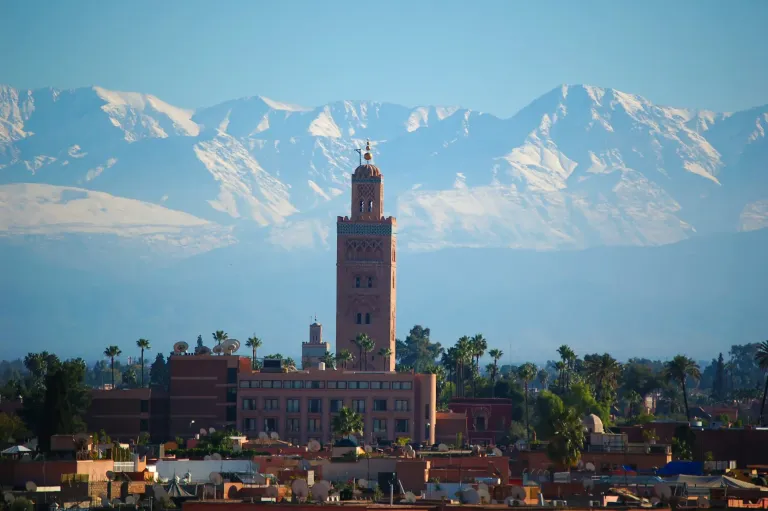
Every guide tells you to use Jemaa el-Fnaa, the big open square, as your anchor. That is good advice. Walk long enough in nearly any direction and someone will point you back toward “the square,” and from there the tall Koutoubia minaret is visible from almost everywhere outside the densest souks. I treated the minaret like a lighthouse.
What worked for me was a simple rule: get lost in the morning, get found by late afternoon. Between about 8 and 10 a.m. the souks are half asleep. Shutters rattle up, shopkeepers sweep their thresholds and nobody is in a hurry to sell you anything. That is the hour to wander into the dyers’ souk and watch skeins of wool dry in saffron and indigo, or to follow the smell of cedar shavings to the woodworkers. By late afternoon the lanes thicken with scooters and the light goes, and I wanted to know exactly how to get home.
Small tricks that actually helped
- I dropped a pin on my riad’s door before leaving, then screenshotted the map in case the signal failed.
- I memorized one landmark near my riad, a small fountain on a corner, and asked for that rather than the riad itself.
- When I asked for directions, I asked shopkeepers or older women, not the young men who volunteer to “show you the way.” Those guides expect a tip, sometimes a large one.
- If someone says a street is closed or the square is “that way, follow me,” smile, say la, shukran (no, thank you) and keep walking. It is almost never closed.

Riad life and the ritual of mint tea
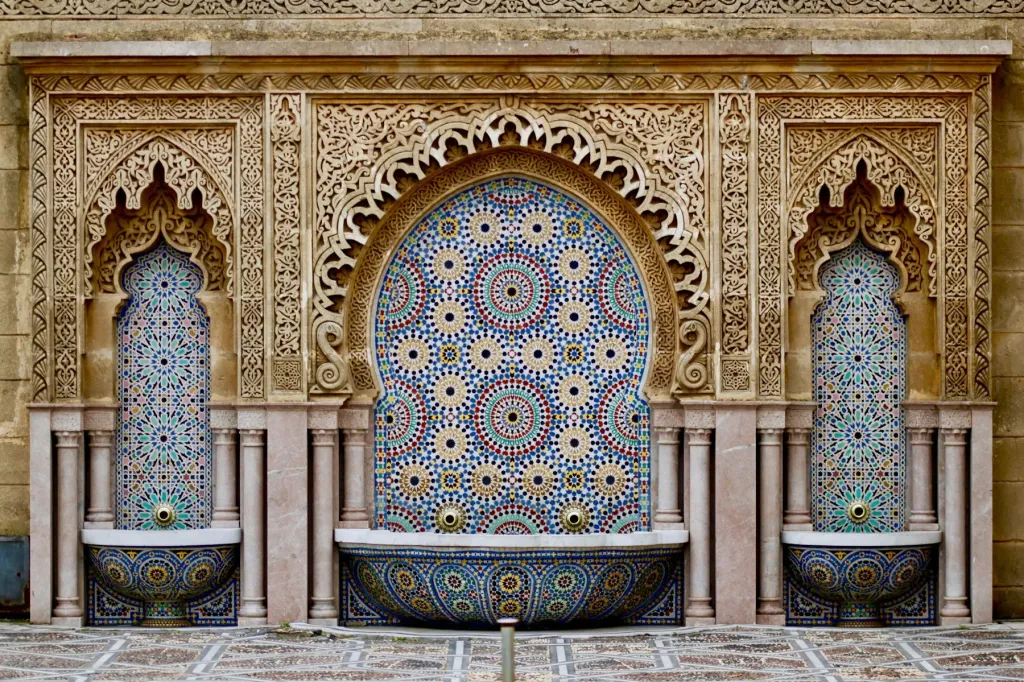
I stayed in a small riad down a lane so narrow I could touch both walls. Outside, it was an unmarked wooden door. Inside, it opened onto a tiled courtyard with orange trees, a burbling fountain and silence so complete it felt like a trick. That contrast is the whole point of a riad: the city turns its face inward, and the beauty is behind the walls.
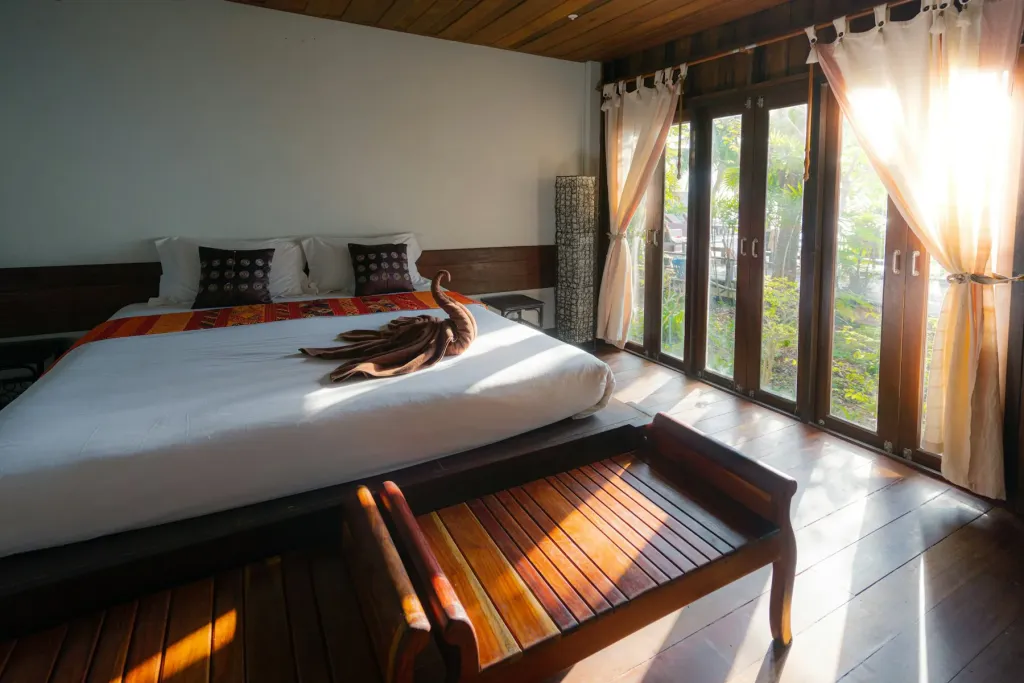
Rooms in a simple, well-reviewed riad ran me about $70 to $110 a night including breakfast, which usually meant msemen (flaky square pancakes), honey, olives, eggs, fresh orange juice and endless coffee on the roof terrace. Ask for a room off the courtyard if you are a light sleeper; the call to prayer carries beautifully, and it carries at dawn.
Then there is the tea. Mint tea in Marrakech is poured from a height into small glasses, sweet enough to stand a spoon in, and offered constantly: at the riad, in shops, by a carpet seller who has no intention of letting you leave quickly. Accepting a glass doesn’t obligate you to buy anything. Refusing politely is fine too, but I said yes often, because some of my best conversations happened over that foam.

Haggling politely, as an American
I grew up in a world of price tags, so bargaining made me nervous. What helped was reframing it: in the souks, the first price is an opening line, not an insult, and the negotiation is a social exchange. Being warm and patient matters more than being tough.
My rough approach, after a few clumsy days:
- Browse a few stalls first and ask prices without committing. You will learn the range fast.
- Only start negotiating on something you actually want. Haggling for sport and walking away at the final price is genuinely rude.
- Counter at around a third to a half of the opening price, with a smile, and expect to meet somewhere in the middle.
- Know your number before you start. When you reach it, say so and mean it.
- If you aren’t close, thank them and walk out. Sometimes the price follows you. Sometimes it doesn’t, and that is fine too.
For reference, I paid about 120 dirhams (roughly $12) for a pair of soft leather babouche slippers after an opening of 350, and around $45 for a small hand-woven cushion cover that started near $110. I probably still paid a little more than a local would. I decided that was a fair tax on my accent and stopped worrying about it.
The first price is an opening line, not an insult. Warmth wins more than toughness ever will.
Maya Collins
Good to know
- Carry small bills and coins. Breaking a 200-dirham note for a 10-dirham juice is a hassle for everyone.
- Ask before photographing people, stalls or performers in the square. Many will expect a few dirhams.
- Steer clear of “free” tannery tours from friendly strangers; they usually end in a shop and a demand for money.
- Dress modestly. Covered shoulders and knees made me feel more comfortable and drew fewer comments.
Where the medina lets you breathe
When the souks got to be too much, I ducked into one of the city’s quieter places. The Ben Youssef Madrasa, a former Quranic school with carved cedar and plaster so fine it looks like lace, was my favorite hour in the city. Le Jardin Secret, a restored riad garden in the middle of the medina, is a calm green pause with a small entry fee. Bahia Palace is busy but worth it for the painted ceilings, and the old Jewish quarter, the Mellah, has a spice market that smells like a pantry in heaven.
Outside the walls, Jardin Majorelle is the famous blue garden tied to Yves Saint Laurent. It is lovely and very popular, so book a timed ticket online and go at opening. I walked there in about 30 minutes from the square; a petit taxi costs a few dollars if you agree on the fare before you get in.
The square after dark
At dusk, Jemaa el-Fnaa transforms. Food stalls roll in, smoke rises from the grills, and storytellers, musicians and henna artists gather their circles. I ate a plate of grilled kefta and a bowl of harira soup for about $6 and watched the whole spectacle from a bench. Pick stalls with lots of locals and fast turnover, point at what you want and confirm the price before anything lands on your table. A few stalls will slip in bread or olives you didn’t order and charge for them.
For the view, the rooftop cafés around the square charge for a drink in exchange for a seat above the chaos. A mint tea up there at sunset, with the minaret going gold and the lanterns coming on below, was easily the best $3 I spent in Morocco.
Planning your own wander
- Getting there: Royal Air Maroc flies nonstop from New York JFK, Washington Dulles and Miami to Casablanca, with a short connection or a roughly three-hour train ride to Marrakech. Many travelers connect through Europe instead.
- Entry: US passport holders don’t need a visa for tourist stays of up to 90 days. Your passport should be valid for the length of your stay; I always travel with six months to spare.
- Money: The Moroccan dirham is a closed currency, so you can’t really get it at home. ATMs at the airport and around the medina worked fine. At the time of my trip, 10 dirhams was roughly $1.
- When to go: March to May and October to November are the sweet spots, with days in the 70s °F. July and August regularly top 100 °F (38 °C).
- How long: Three nights is enough to see the highlights. Five lets you actually get lost, which is the point.
Destination guide · Morocco
Marrakech
Souks, riads and Atlas Mountain day trips
- Best time to visit
- March to May, October to November
- Daily budget
- Budget-friendly
- Visa for US citizens
- Visa-free up to 90 days
- Language
- Arabic, Berber, French
- Currency
- Moroccan dirham (MAD)
- Time zone
- Africa/Casablanca
On my last evening I went out without my phone at all. I took two wrong turns, drank one glass of tea I hadn’t planned on and came home through a lane I had never seen, lit only by a single lantern above a door. Marrakech never stopped surprising me, and I hope it never stops surprising you.