

The first custard tart of the day arrived at 8:05 a.m., still too hot to hold, on a paper napkin that turned translucent in about four seconds. The pastry shattered when I bit it, the custard underneath was barely set and tasted of vanilla, lemon peel and scorched sugar, and I remember thinking: if this is number one, how am I supposed to rank the other eight?
That was the problem I had signed up for. Two friends from Denver and I had a single free day in Lisbon at the end of a longer Portugal trip, and we decided to spend it on one question: where is the best pastel de nata in the city? We walked from Belém in the west to Alfama in the east, ate nine tarts each (some of us more, nobody is proud of it), drank too many tiny coffees and argued the whole way. This is the honest result.
A quick disclaimer before the crumbs fly. This is a ranking of nine tarts on one day in October, not a scientific survey of a city with hundreds of pastelarias. Ovens have good and bad hours. But after a day like this, you learn exactly what separates a good tart from a great one, and that is the part worth stealing.
In this story8 sections
What makes a great pastel de nata
Before you start, it helps to know what you are judging. A pastel de nata is a small tart of laminated, almost flaky puff pastry filled with an egg-yolk custard, baked in a very hot oven until the top blisters with dark spots. That’s it. The simplicity is exactly why the differences matter so much.
By lunchtime we had settled on four things to score:
- The shell. It should crackle, with distinct spiral layers on the bottom. Soft, bready or greasy pastry is the most common failure.
- The custard. Silky and just set, wobbling slightly in the center, never rubbery or eggy. A hint of lemon or cinnamon is a bonus.
- The burn. Those dark caramelized freckles on top are flavor, not a mistake. A pale tart is a sad tart.
- The temperature. Warm beats everything. A tart that is merely good straight from the oven will outscore a great one that has sat in a display case since dawn.
How to order: walk to the counter, say “um pastel de nata, por favor” (or just point and hold up fingers), and add “e uma bica” for a short espresso. Most places hand you shakers of cinnamon and powdered sugar. Try the first bite plain, then dust. Expect to pay about $1.30 to $1.80 per tart and around $1 for a bica at the counter; sitting at a table often costs a little more.
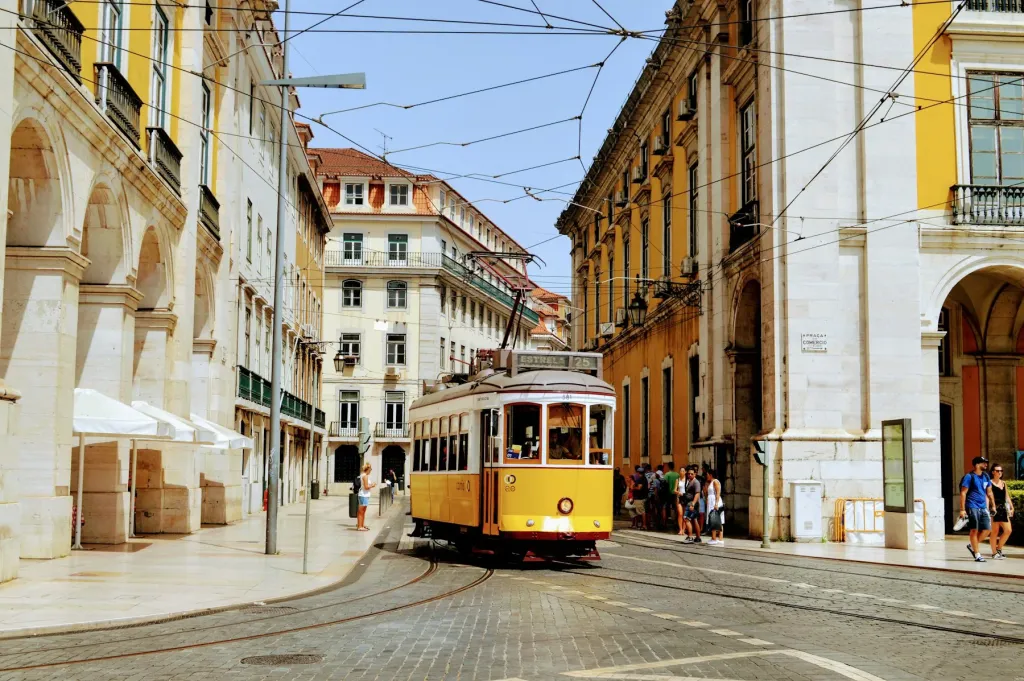
Morning in Belém: the original and its rivals
We started where everyone starts, at Pastéis de Belém, the bakery beside the Jerónimos Monastery that has been making its version since 1837 from a recipe said to come from the monks next door. Go early. By 10 a.m. the takeaway line can stretch down the sidewalk; at opening it moves in minutes. Skip the line entirely by walking inside to the maze of blue-tiled dining rooms, where table service is fast and you can watch tarts come out in trays.
Their tart is technically a “pastel de Belém,” and it is different from the rest: a slightly thinner, less sweet custard, a very crisp shell, and an almost molten center when it is fresh. It is a tart that rewards cinnamon. All three of us ranked it highly, and one of us ranked it first, which became the defining argument of the day.
Within a few blocks we tried two more from ordinary neighborhood cafés, the kind with a TV in the corner and old men reading newspapers at the counter. One was excellent, warm and blistered. The other had clearly been baked hours earlier and had the soft, sweating shell of a tart that has given up. It was a useful early lesson: the name on the door matters less than when the tray came out.
Good to know
Tram 15E runs along the river from Praça da Figueira and Cais do Sodré to Belém in about 25–30 minutes. Pay with a rechargeable Navegante or Viva Viagem card (about $2 per ride on stored value) rather than buying a ticket on board, which costs far more.
Chiado and the downtown middle stretch
From Belém we took the tram back toward Cais do Sodré and climbed into Chiado. This is where we hit Manteigaria, a newer, single-minded shop that sells essentially one thing. A bell rings when a fresh batch comes out of the oven, and that sound alone is worth the trip. Their tart is richer and sweeter than Belém’s, with a deeper golden custard and a shell so crisp it sounds like stepping on autumn leaves.
Standing at the narrow counter with a bica, we ate two each, because one of us insisted on testing consistency. Two of our three judges put Manteigaria at the top of their lists.
Downtown in the Baixa, the tarts got more uneven. We tried a big, old-fashioned pastelaria with a long glass case full of cakes, a modern café with sourdough and oat-milk lattes, and a tourist-facing spot on a main pedestrian street. The modern café made a surprisingly good tart with a darker burn. The big pastelaria had the best atmosphere and the most forgettable custard. The pedestrian street tart was the worst of the day: pale, cold, and somehow chewy.
The name on the door matters less than when the tray came out of the oven.
Maya Collins
Afternoon in Alfama, and the slump
Every food crawl has a slump, and ours hit somewhere around tart number seven. Custard is not light, and by mid-afternoon we were walking slower, climbing Alfama’s staircases with the energy of people who had just eaten a dozen eggs, which, in a sense, we had.
We broke it up the only way that works: a long sit-down. At the Miradouro de Santa Luzia we sat on a bench above the terracotta roofs and the river, drank water and said nothing for twenty minutes. Then we walked to a tiny family café tucked into a lane below the castle, where an older woman pulled a tray from the oven while we watched. Tart number eight, warm, perfectly freckled, gone in three bites, was the most memorable of the day, mostly because of the moment.

The final ranking
We averaged our three scores and the result surprised none of us and pleased nobody completely.
- Manteigaria (Chiado). Richest custard, loudest crackle, freshest trays thanks to constant baking. Winner by a nose.
- Pastéis de Belém. The most distinctive tart of the day and the one with the most history. If you like less sweet and more cinnamon, this is your number one.
- The family café below the castle in Alfama. Fresh from the oven, perfect burn. Proof that a nameless place can beat the famous ones on any given afternoon.
- The modern café in the Baixa. Dark, almost bitter caramelization, good pastry.
- The first neighborhood café in Belém. Warm, honest, cheaper than its famous neighbor.
The other four, two tired chain tarts, a pretty bakery whose custard had set like flan and a cold supermarket tart we bought out of curiosity, filled the bottom of the list, and nobody argued about any of them.
How to do your own crawl
You do not need nine. Four or five is a perfect day, and it leaves room for lunch. If I did it again, I would do this:
- Start at Pastéis de Belém right at opening (around 8 a.m.), then see the Jerónimos Monastery and walk the riverfront to the Monument to the Discoveries.
- Take tram 15E back to the center and climb to Chiado for a mid-morning tart at Manteigaria.
- Have a real lunch: grilled sardines or a bifana (pork sandwich) somewhere in the Baixa. Your body will thank you.
- Ride or walk up to Alfama in the afternoon and find a small café where the oven is visibly running.
Our mistake
We ate our first three tarts in under ninety minutes with nothing but espresso. Drink water between stops, alternate sweet with something savory, and walk the longer route. Lisbon’s hills are free cardio.
Planning a Lisbon food day
Getting there: There are nonstop flights to Lisbon from several US hubs, including Newark, New York JFK, Boston, Miami and Chicago, at roughly 6.5 to 8 hours from the East Coast. The metro’s red line runs from the airport to the center in about 25 minutes.
Entry: Portugal is in the Schengen Area, so US passport holders can visit visa-free for up to 90 days in any 180-day period. Your passport should be valid at least three months beyond your departure date. Check the current status of the EU’s new ETIAS travel authorization before you go.
When to go: Spring (April to June) and fall (September to October) bring warm days in the 70s°F and fewer crowds than midsummer. Tarts, happily, are in season all year.
Money: Portugal uses the euro. Cards work almost everywhere, but carry a few coins for small cafés and counter coffees.
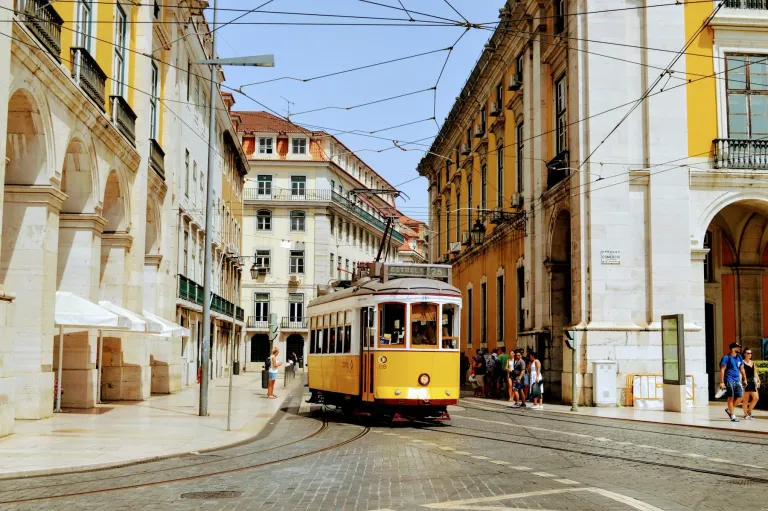
Destination guide · Portugal
Lisbon
Trams, tiles and custard tarts
- Best time to visit
- March to June, September to October
- Daily budget
- Moderate
- Visa for US citizens
- Visa-free up to 90 days (Schengen)
- Language
- Portuguese
- Currency
- Euro (EUR)
- Time zone
- Europe/Lisbon
We went to Lisbon to settle an argument and came home with a bigger one. Go hungry, go early, and listen for the bell when a fresh tray comes out. Then come back and tell me where I got it wrong.