


At 7:15 in the morning, the path from Fira to Imerovigli belonged to me, a man sweeping his café steps and a gray cat that seemed to be walking the same direction on purpose. The caldera below was flat and silver, the cruise ships hadn’t arrived yet, and the only sound was a church bell somewhere on the cliff. Eight hours later, I stood on the same stretch of path and had to wait for a gap in the crowd to pass a tour group taking selfies.
That’s Santorini in one day. The views you’ve seen in a thousand photos are completely real, and so are the crowds. But after ten days on the island in late May, I’m convinced you can have one without too much of the other. It comes down to three choices: where you sleep, when you walk, and which sunset you skip.
In this story8 sections
Sleep in Imerovigli, not Oia
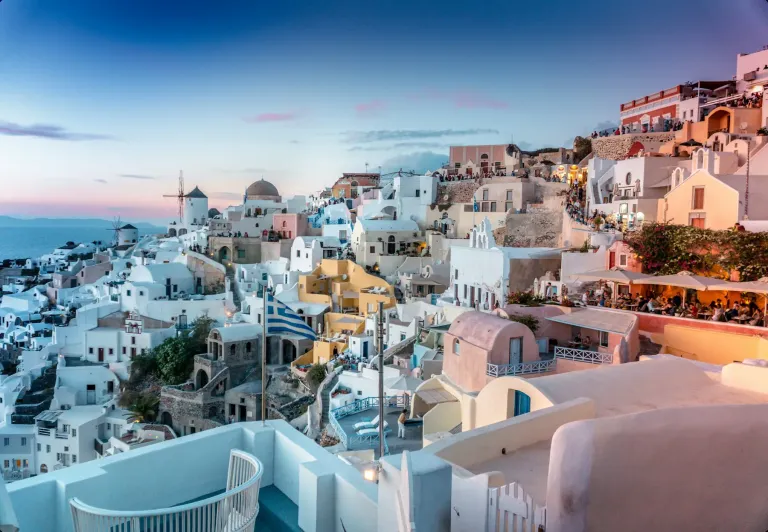
Oia is the famous one, with the blue domes and the windmills, and it is genuinely lovely. It’s also where many cruise excursions and day-trippers end up, and its lanes are narrow. By midday in summer, walking through the center can feel like leaving a stadium.
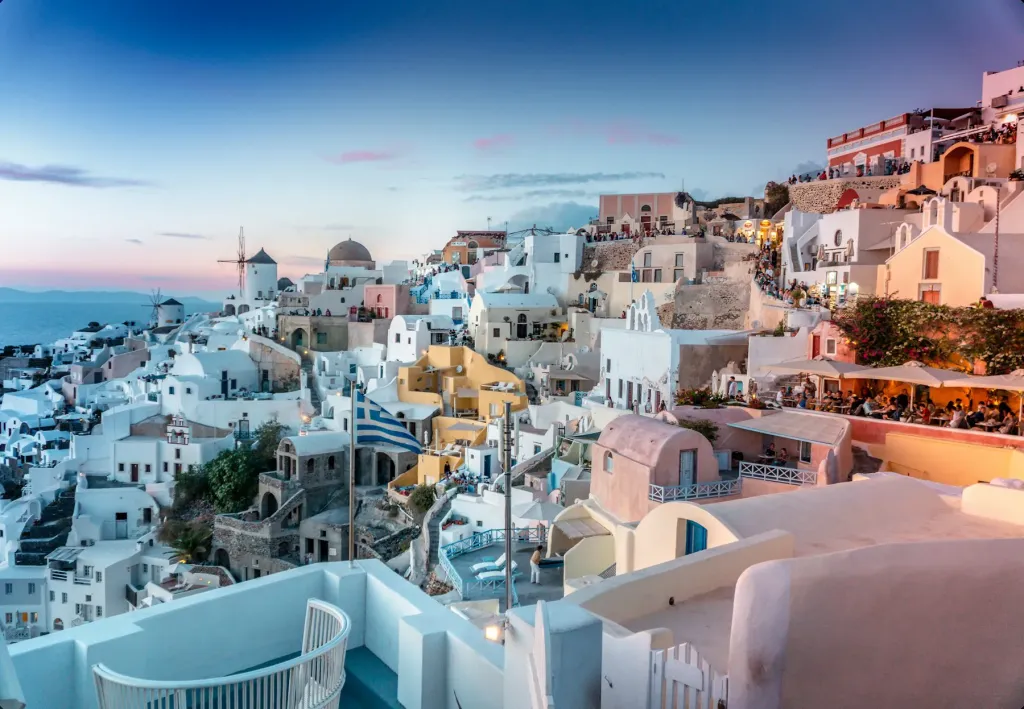
Imerovigli sits on the highest point of the caldera rim, about a 30-minute walk north of Fira. It has the same whitewashed cliffside hotels and the same view, but almost no shops and far less foot traffic. In the evening, with the island lit below and Skaros Rock in silhouette, it was the most peaceful place I found on Santorini. My cave-style room with a shared terrace cost about $240 a night in late May, and the view from my door was every bit as good as the famous one.
If you want more value and a real village feeling, look inland at Pyrgos or Megalochori. You lose the caldera from your bed, but you gain quiet squares, family tavernas, and prices that can be half of what you’d pay on the rim.
Hike early, and hike the whole rim
The single best thing I did on Santorini was free. The caldera trail from Fira to Oia runs about 6 miles (10 km) along the rim, through Firostefani and Imerovigli, past Skaros Rock, then over a rougher, open stretch to Oia. It takes three to four hours with photo stops, and the views get better the farther north you go.
Start at sunrise, and I mean it. By 10:00 AM in May the sun was already strong, the middle section has almost no shade, and the first cruise groups start to fill the paths near Fira. I left at 6:45 AM, ate a spinach pie in Imerovigli around 8:00, and reached Oia before 10:30, when it still felt like a village. Then I took the bus back.
Before you go
- Bring at least 1.5 liters of water, sunscreen and a hat. There are few cafés between Imerovigli and Oia.
- Wear real shoes. Parts of the trail are loose gravel and uneven stone.
- The detour out to Skaros Rock adds about an hour; the path down is steep but worth it.
- The island’s public buses run from the Fira bus station to Oia and most villages for a few dollars.
Watch the cruise schedule, not just the weather
This was my most useful tip of the whole trip: Santorini’s busiest hours are set by cruise ships. On a heavy day, several ships can anchor in the caldera, sending thousands of passengers up to Fira by cable car or donkey path and on to Oia by coach. On a light day, the island feels completely different.
Cruise schedules for the port are published online months in advance. I checked them and planned around them: heavy ship days were my beach and inland days, at Perissa’s black-sand beach or the quiet wineries near Pyrgos. Light days were for Fira and Oia. It sounds obsessive. It worked beautifully.
Greece has also started capping and charging fees for cruise visits in peak season, which helps a bit, but the rhythm is still the same: the caldera towns are busiest from late morning to late afternoon.
Santorini’s crowds keep a schedule. Once you know it, you can live on the other side of it.
Maya Collins
Skip the Oia sunset (yes, really)
Every evening in season, hundreds of people press against the walls by Oia’s castle ruins, waiting for the sun to set, then applaud and try to leave through the same narrow lanes at once. I watched it once from a distance and felt no need to join.
Here are my alternatives, any of which I’d choose again:
- Imerovigli or Skaros Rock. You see the sun drop behind Thirasia with Oia’s lights coming on to the north.
- Pyrgos, the hilltop village in the center of the island. You see the sunset over the whole island and both coasts, often with only a handful of people.
- Akrotiri lighthouse, at the southwestern tip. It does get busy, but the setting is wild and windswept.
- From the water. A caldera sailing trip that ends at sunset is a splurge, often $150 to $200 per person, but you’re on a boat with a few dozen people instead of a wall with hundreds.
The Santorini I liked best
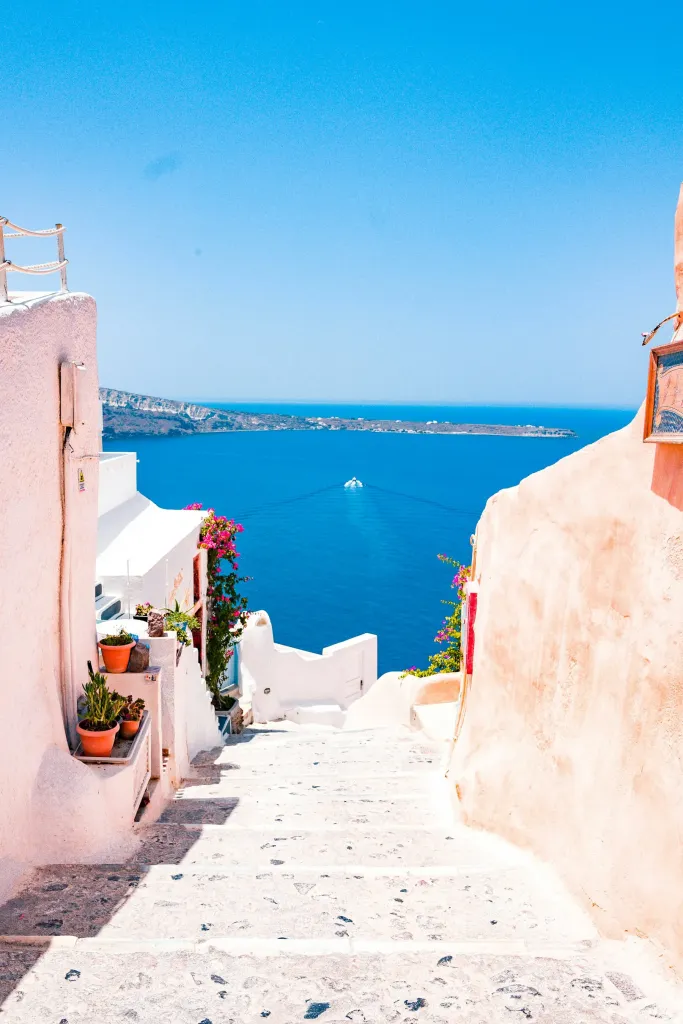
Away from the rim, Santorini is a working island with vineyards, chapels and fishing harbors. My favorite day started with a morning swim at Ammoudi Bay below Oia, before the tavernas opened, then a ferry across to Thirasia, the small island across the caldera. It has a few villages, a handful of tavernas and almost no visitors. I ate grilled octopus at a harbor table and watched Santorini’s cliffs from the other side.
The prehistoric town at Akrotiri, preserved under volcanic ash like a Bronze Age Pompeii, is covered by a modern roof and is cool and fascinating on a hot afternoon. And the island’s wineries, with their low, basket-shaped vines, make for a slow afternoon of tastings with almost no crowds.

When to go, how to get there, where to stay
When: Late April to early June and late September to October are the sweet spots. Water is cool in May (around 68°F) but swimmable, the air is in the 70s, and prices are well below July and August. Many hotels and restaurants close from November through March.
Getting there: From the US, fly to Athens. Nonstop flights run from New York and several other hubs, especially in summer. From Athens, it’s a 45-minute flight to Santorini or a ferry of about 5 to 8 hours, depending on the boat. US citizens can visit Greece and the rest of the Schengen area without a visa for up to 90 days, though Europe’s new ETIAS online authorization is expected to apply to Americans soon, so check before you book.
Money: The euro. Cards work almost everywhere, but carry a little cash for buses and small bakeries. I spent about $175 a day on average, plus my room.
Where I’d stay again
 StayMy pick
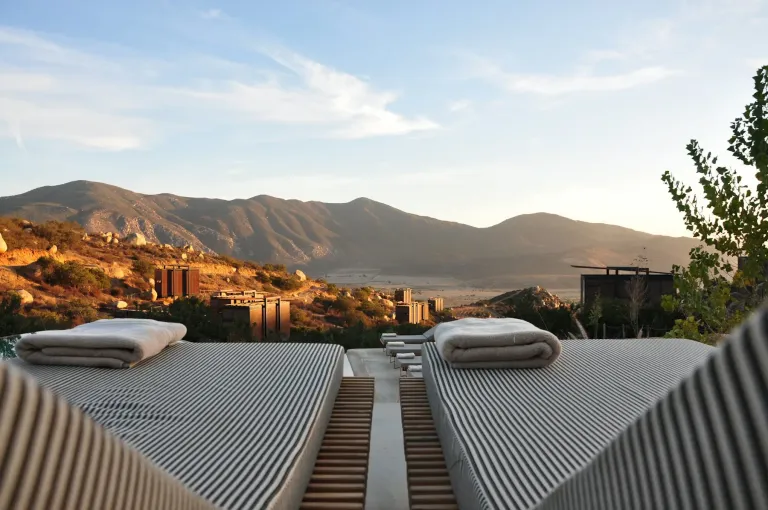
Cave suites on the Imerovigli rim
Imerovigli, Santorini
- Caldera view terrace
- Quiet after dark
- 30-minute walk to Fira
from$260/ night
Check availability — Cave suites on the Imerovigli rim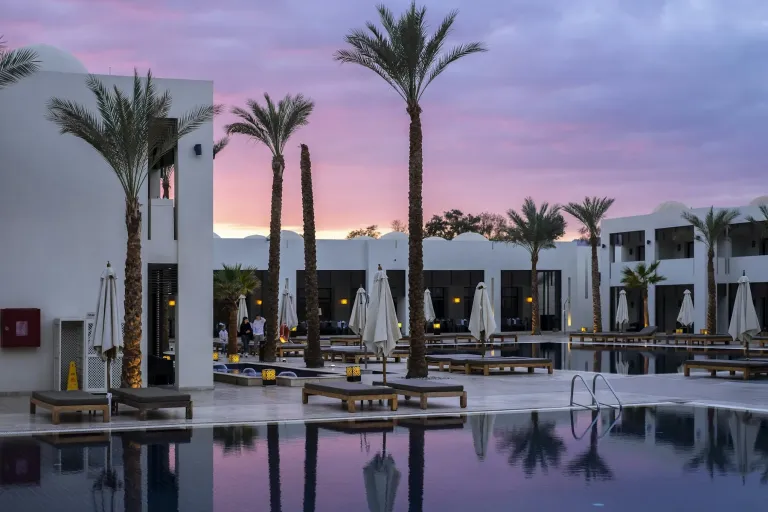 StayBest value
Village guesthouse with pool
Pyrgos, Santorini
- Pool and garden
- Walk to sunset point
- Near wineries
from$140/ night
Check availability — Village guesthouse with pool Tour
TourSmall-group caldera sunset sail
Ammoudi Bay or Vlychada
- Swim stops
- Dinner on board
- Sunset from the water
from$170/ person
See tours — Small-group caldera sunset sailSome links are affiliate links: we may earn a small commission at no extra cost to you.
Destination guide · Greece
Santorini
Whitewashed villages on a sunken volcano
- Best time to visit
- May to June, September to October
- Daily budget
- Splurge
- Visa for US citizens
- Visa-free up to 90 days (Schengen; ETIAS from 2026)
- Language
- Greek
- Currency
- Euro (EUR)
- Time zone
- Europe/Athens
On my last morning I walked the rim from Imerovigli to Fira one more time at sunrise, with the same gray cat and the same church bell. I can’t promise you the island to yourself. But I can promise that if you set the alarm, sleep a village away from the crowds and let someone else have the Oia sunset, Santorini will give you plenty of quiet moments that feel like the postcard, only better.