
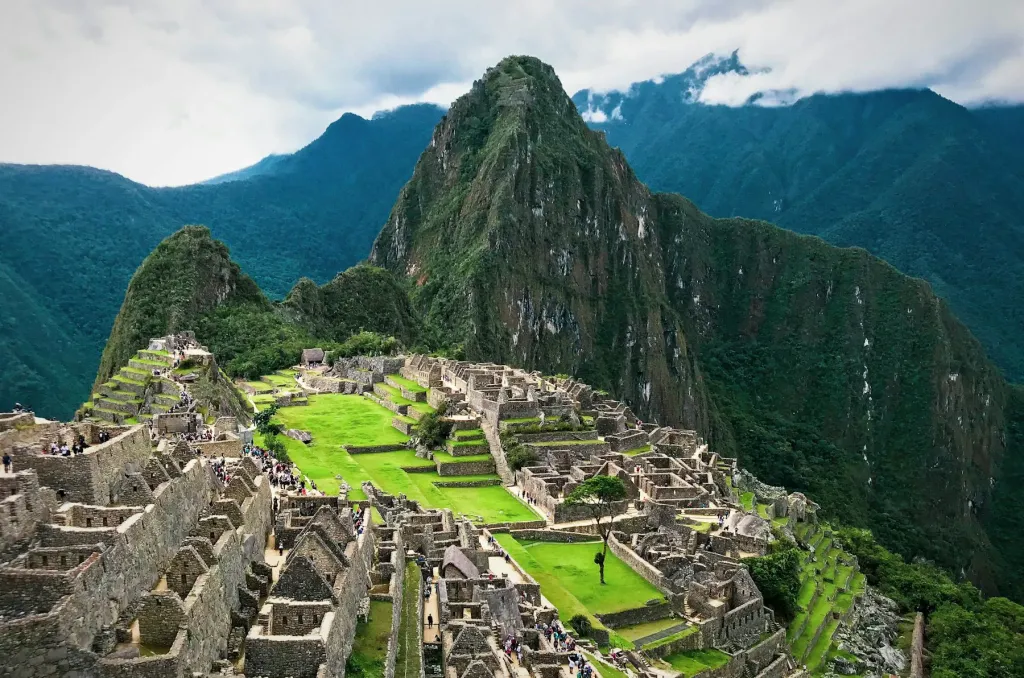
At 5:30 on the fourth morning, my friend Jess and I were standing in a line of headlamps at a checkpoint in the dark, waiting for a gate to open. Ninety minutes later we climbed the last stone steps to the Sun Gate, and the clouds below us shifted just long enough to show Machu Picchu, small and impossibly green, exactly where every photo had promised it would be. I cried a little. Jess pretended not to notice.
Two days later we came back the easy way, on a train with a glass roof, a snack box and a window seat beside the Urubamba River. It was also wonderful. So when people ask me whether the Inca Trail is worth it, or whether the train is “cheating,” my honest answer is that both are good ways to arrive. They are just very different trips.
Here is what each one actually involves, what it cost us and how to pick the right one for you.
In this story7 sections
Option one: four days on the Classic Inca Trail
The Classic Inca Trail runs about 26 miles (42 km) from a trailhead near the village of Piscacucho, known as Km 82, to Machu Picchu. It follows original Inca stonework for long stretches, passes ruins you can only reach on foot and crosses three high passes. The distance doesn’t sound like much. The altitude and the stairs are what make it hard.
Day by day, roughly
- Day 1: A gentle warm-up of about 7 miles along the river valley, past the Llactapata ruins. We thought we were in great shape.
- Day 2: The big one. A long climb to Dead Woman’s Pass at 13,828 feet (4,215 m), then a knee-punishing descent. Most groups hike 6 to 8 hours.
- Day 3: The longest and most beautiful day, through cloud forest and past Runkurakay, Sayacmarka and Wiñay Wayna, our favorite ruin of the entire trip.
- Day 4: The pre-dawn start, the Sun Gate and finally Machu Picchu itself.
You cannot hike the Classic Trail independently. Peru’s government limits daily permits to about 500 people, and that number includes guides, cooks and porters, so only around 200 spots per day go to trekkers. Permits are sold only through licensed tour operators, carry your passport number and are non-transferable. For May through September, they often sell out four to six months ahead. The trail closes every February for maintenance.
What the trail really asks of you
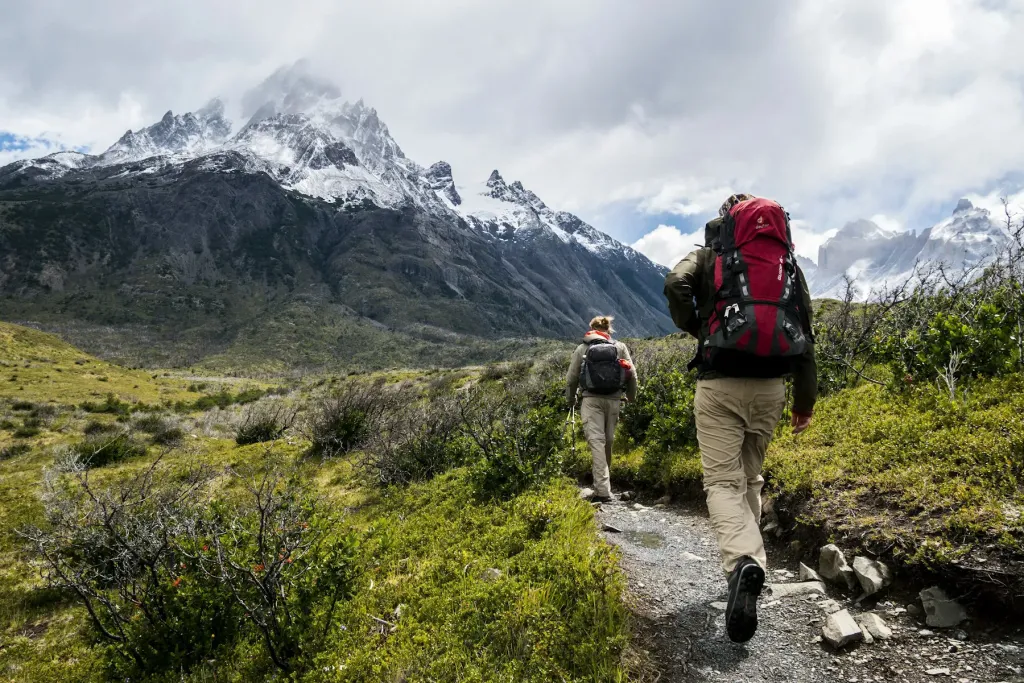
I hike a lot at home in Colorado, and I still found Day 2 humbling. The steps are uneven, sometimes knee-high, and the air near the pass has roughly 40 percent less oxygen than at sea level. Our group ranged from a 24-year-old marathoner to a retired couple in their 60s, and everyone made it. The difference was pace, not fitness.
What helped most was time in Cusco first. Cusco sits at about 11,150 feet, and we spent three nights there and in the lower Sacred Valley before starting. We drank coca tea, walked slowly up the cobbled hills and skipped the pisco sours for the first two nights. Talk to your doctor before you go about altitude medication; plenty of hikers in our group used it.
The porters deserve their own paragraph. These men, mostly from Quechua farming communities, carry the tents, food and kitchen at a pace that makes you feel like you are standing still. Choose an operator with a public commitment to porter welfare, fair weight limits and proper gear, and budget for tips. We gave around $60 each to the porter pool, plus extra for the cook and guide, following our operator’s guidance.
The difference on that trail was never fitness. It was pace, patience and a very good pair of knees.
Maya Collins
What I packed for the Inca Trail
Porters carried the camp, so I only hauled a 25-liter daypack.
0 of 20 packed— ready to go!
Option two: the train to Aguas Calientes
Two companies, PeruRail and Inca Rail, run trains from Ollantaytambo in the Sacred Valley to Aguas Calientes, the town at the foot of Machu Picchu. The ride takes about an hour and a half to two hours, and the scenery is spectacular as the valley narrows and the dry hills turn into cloud forest. Some departures also leave from near Cusco, which adds a few hours.
Fares vary a lot by class and time of day. Basic tourist-class seats ran us roughly $65 to $90 each way; the fancier panoramic cars cost more, and the luxury Belmond Hiram Bingham train sits in another price universe entirely. From Aguas Calientes, buses climb the switchbacks to the site in about 25 minutes, for around $24 each way, or you can hike up about 1,700 vertical feet of stairs in an hour or so.
The train’s biggest advantage is flexibility. You can book a few weeks out instead of months, stay a night in Aguas Calientes and visit the ruins in the quiet early morning, and there is no camping and no Day 2. It is also the right choice for anyone with knee trouble, limited vacation time or simply no desire to sleep in a tent at 12,000 feet.

So which one is right for you?
After doing both, here is how I would think about it.
Choose the trail if…
- You can commit to dates four to six months in advance.
- You have at least five or six days around it for acclimatization.
- The journey matters as much as the destination to you. Wiñay Wayna alone is worth the effort.
- Your budget can stretch to roughly $750 to $1,100 per person for a reputable group trek, plus gear, tips and the train back.
Choose the train if…
- You are booking late, traveling with kids or older relatives, or managing an injury.
- You want a full, unhurried morning inside the ruins.
- You would rather spend those days in the Sacred Valley, visiting Pisac, Moray or the Maras salt pans.
There is also a middle path. The one-day Short Inca Trail starts at Km 104, climbs past Wiñay Wayna and enters through the Sun Gate in the afternoon. It still needs a permit and a guide, but it gives you that famous first view without the camping.
Before you go
Machu Picchu runs on timed tickets assigned to set routes, called circuits, and the daily cap is strictly enforced. Inca Trail permits include site entry, but train travelers need to buy entry separately, ideally weeks ahead in high season. Expect to show your passport at every checkpoint, and bring the same one you used to book.
The practical bits
From the US, most travelers fly to Lima, with nonstops from hubs like Miami, Houston, Atlanta, Fort Lauderdale and New York, then take a short domestic flight up to Cusco. US citizens don’t need a visa for tourist stays in Peru. The dry season, roughly May through September, is the most reliable for hiking, with cold nights and clear mornings; the wettest months are January and February. Peru uses the sol, and while cards worked in Cusco, we carried small notes for tips, bathrooms and snacks on the trail.
Destination guide · Peru
Machu Picchu
The Inca citadel above the clouds
- Best time to visit
- May to September (dry season)
- Daily budget
- Moderate
- Visa for US citizens
- Visa-free up to 90 days
- Language
- Spanish, Quechua
- Currency
- Peruvian sol (PEN)
- Time zone
- America/Lima
Whichever way you go, give yourself the gift of time once you arrive. Sit on a terrace, let the clouds do their thing and watch the mountain appear. It is worth every step, or every train ticket.