
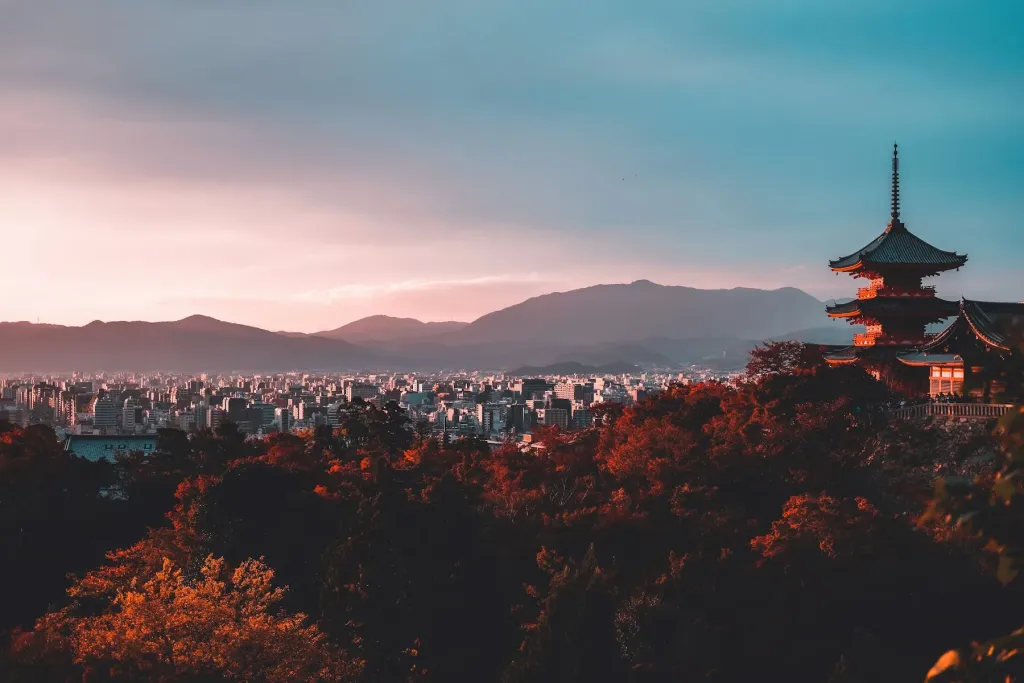
The first maple I really looked at in Kyoto was at 6:50 in the morning, on a wooden bridge over a ravine of red. There were maybe a dozen people on it, most of them older Japanese photographers with tripods and thermoses, speaking in whispers. By 9:30 the same bridge would be shoulder to shoulder, with staff holding signs asking people not to stop. We knew this because we came back that afternoon to check. It was like visiting a different temple.
My friend Jess and I spent six nights in Kyoto in late November, at the very peak of the fall color, as the second leg of a three-week trip through Japan. We arrived worried about the crowds everyone warns you about, and we left convinced that Kyoto in autumn is still one of the most beautiful places on earth, as long as you’re willing to set an alarm and walk a little farther than the tour groups.
This is how we did it, and the three gardens we would get on a plane for again.
In this story7 sections
When the leaves actually turn
Kyoto’s fall color, called kōyō, usually peaks between mid-November and early December. The mountains to the north, like Kurama and Ohara, turn a week or so before the city center, and the gardens in the south and east hold on a little longer. A warm October can push everything back by a week, so we watched the Japanese foliage forecasts (the same kind of forecast they run for cherry blossoms) for a month before we finalized our dates.
We landed on November 20 and caught most gardens at full red. If you can only choose one week, the last week of November is the safest bet, with early December a quieter backup. Temperatures were pleasant, about 60°F in the afternoon and close to 40°F at dawn, which matters because dawn is when you’ll be outside.
Good to know
- Many popular temples open between 8:00 and 9:00 AM. Being in line 20 minutes early makes a real difference.
- Several temples run special evening illuminations in autumn, with separate tickets of around $6 to $10.
- Some smaller temples open only during autumn, and a few require advance reservations online.
- Bring cash. Entry fees are usually ¥500 to ¥1,000 (about $3.50 to $7), and many small temples don’t take cards.
Our rules for beating the crowds
Kyoto’s biggest names, Kiyomizu-dera, Fushimi Inari, Arashiyama’s bamboo grove, are spectacular and can be overwhelming in November. We didn’t skip them entirely, but we followed a few rules that made the week feel calm.
- One famous place per day, first thing in the morning. Fushimi Inari is open around the clock, so we started at 6:30 AM and had long stretches of the gates to ourselves.
- Walk past the first viewpoint. At almost every big site, most visitors stop at the first photo spot. Ten more minutes uphill usually means half the people.
- Afternoons for neighborhoods, not temples. We spent our middle hours in quieter places: the Philosopher’s Path in the east, the shops and coffee spots of Demachiyanagi, a long lunch near the Kamo River.
- Use the evening illuminations. Seeing a garden lit at night is a completely different experience, and lines move faster than the daytime crowds.
- Take the bus less, the train and your feet more. City buses get jammed in November. The subway and the private Keihan and Eizan lines were faster and calmer.
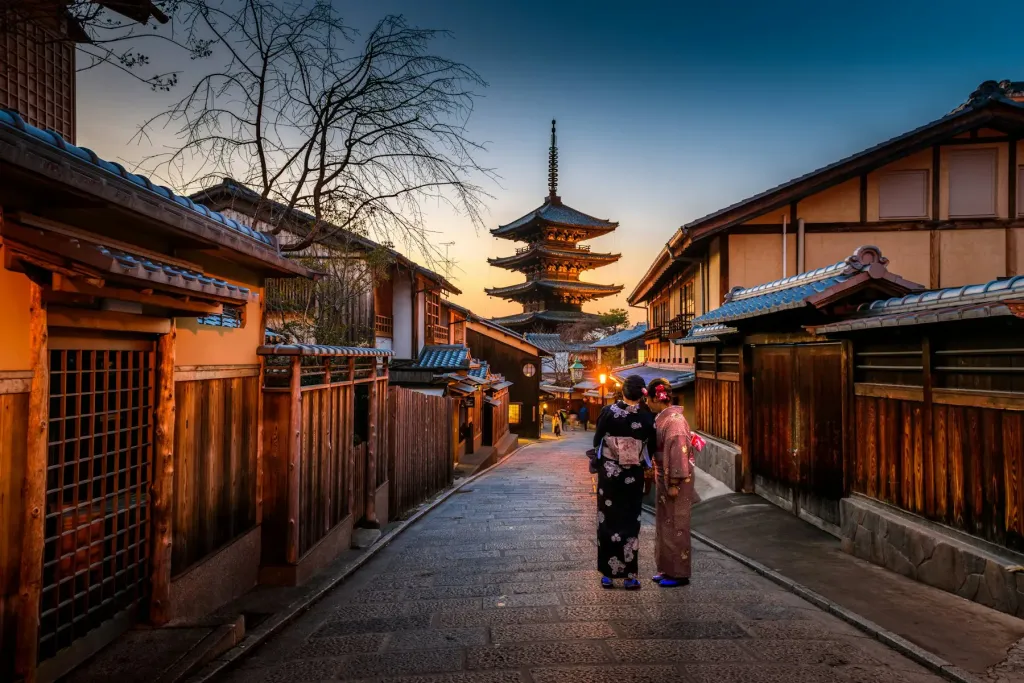
The three gardens we’d go back for
Tōfuku-ji at opening time
This is the bridge from the opening of this story. Tōfuku-ji, in southeast Kyoto, has a valley of maples crossed by the covered Tsūten-kyō bridge, and in peak week it is one of the busiest places in the city. Arrive before the gates open and you’ll walk into it almost alone. The morning light comes through the leaves sideways and turns everything a glowing orange. Afterward, the small raked-gravel gardens of the Hōjō, with their checkerboard moss, felt like a deep breath.
Eikandō by night
Eikandō, near the start of the Philosopher’s Path, is famous enough that the slogan “Eikandō for autumn leaves” has been around for centuries. By day it can be very crowded. We went to the evening illumination instead, and the reflected maples in the pond, lit from below, were the single most beautiful thing we saw in Japan. Go at the start of the illumination and plan to queue for 20 to 30 minutes.
Sanzen-in in Ohara
Ohara is a farming valley about an hour north of central Kyoto by bus, and that hour keeps most of the crowds away. Sanzen-in has a moss garden scattered with small stone figures, framed by maples that turn early and fall onto the green like confetti. We stayed for tea and a sweet on the veranda, then walked up the quiet lane to Hōsen-in, where you can sit and look at a garden framed like a painting. It was our slowest, happiest day.
Kyoto in autumn rewards the people who are cold, sleepy and early, and it rewards them generously.
Maya Collins
Our week, day by day
We kept each day to one anchor and a lot of open space. Here is the rhythm that worked for us.
Itinerary
Four autumn days in Kyoto
- 4 days
- 10 places
- $160 on the ground
Day 1
Tōfuku-ji and Fushimi Inari
- Fushimi Inari Taisha
- Tōfuku-ji
Gates of Fushimi Inari at dawn, then Tōfuku-ji right at opening. Long nap after lunch is part of the plan.
Day 2
Eastern hills and Eikandō
- Nanzen-ji
- Philosopher’s Path
- Eikandō illumination
Walk the Philosopher’s Path slowly in the afternoon, dinner nearby, then the evening illumination at Eikandō.
Day 3
A day in Ohara
- Sanzen-in
- Hōsen-in
Early bus from Kyoto Station or Demachiyanagi. Lunch in the village and back before dark.
Day 4
Arashiyama the quiet way
- Bamboo grove
- Hōgon-in
- Ōkōchi Sansō
Bamboo grove before 8:00 AM, then the hillside villa garden at Ōkōchi Sansō with its matcha included.
Estimated on-the-ground cost$160
Where we stayed and what it cost
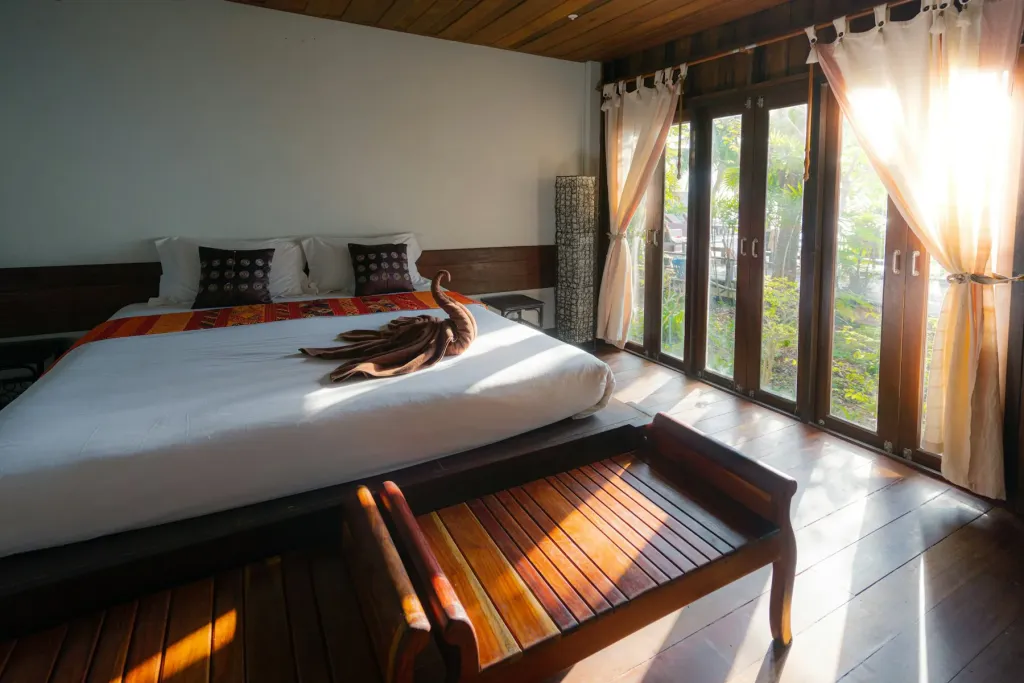
We split a room in a small ryokan-style guesthouse near Gojō, between Kyoto Station and Gion. It was walking distance to the Keihan line and to Higashiyama, which mattered because we left before buses started running most mornings. In November, central Kyoto prices climb sharply: we paid about $210 a night for two, with a simple breakfast. Book three to four months ahead for peak week, or consider staying in Osaka, about 30 minutes away by train, if prices get silly.
Our daily spend outside the room averaged around $75 each, including temple fees, transport, two proper meals and a frankly unreasonable number of convenience-store snacks. Kyoto is not cheap in autumn, but it is easy to eat well for little at lunch, with set menus of soba, tofu or obanzai home-style dishes running $10 to $18.
Getting there from the US
Fly into Osaka’s Kansai International (KIX) or Tokyo. Nonstops to Tokyo run from many US hubs, including Los Angeles, San Francisco, Seattle, Dallas, Chicago and New York. From Tokyo, the shinkansen to Kyoto takes a little over two hours. From Kansai airport, the Haruka express train reaches Kyoto Station in about 75 minutes. US passport holders can visit Japan visa-free for short tourist stays.

Destination guide · Japan
Kyoto
Temples, gardens and slow tea mornings
- Best time to visit
- Late March to May, October to November
- Daily budget
- Pricey
- Visa for US citizens
- Visa-free up to 90 days
- Language
- Japanese
- Currency
- Japanese yen (JPY)
- Time zone
- Asia/Tokyo
We left Kyoto on a gray morning with leaves falling steadily on the platform, already talking about a winter trip. That’s the thing about this city: it gives you a season so perfect you want to see what the next one looks like. If you go in autumn, go early, walk farther than you think you should, and leave room for one long afternoon of tea on a veranda doing absolutely nothing.