
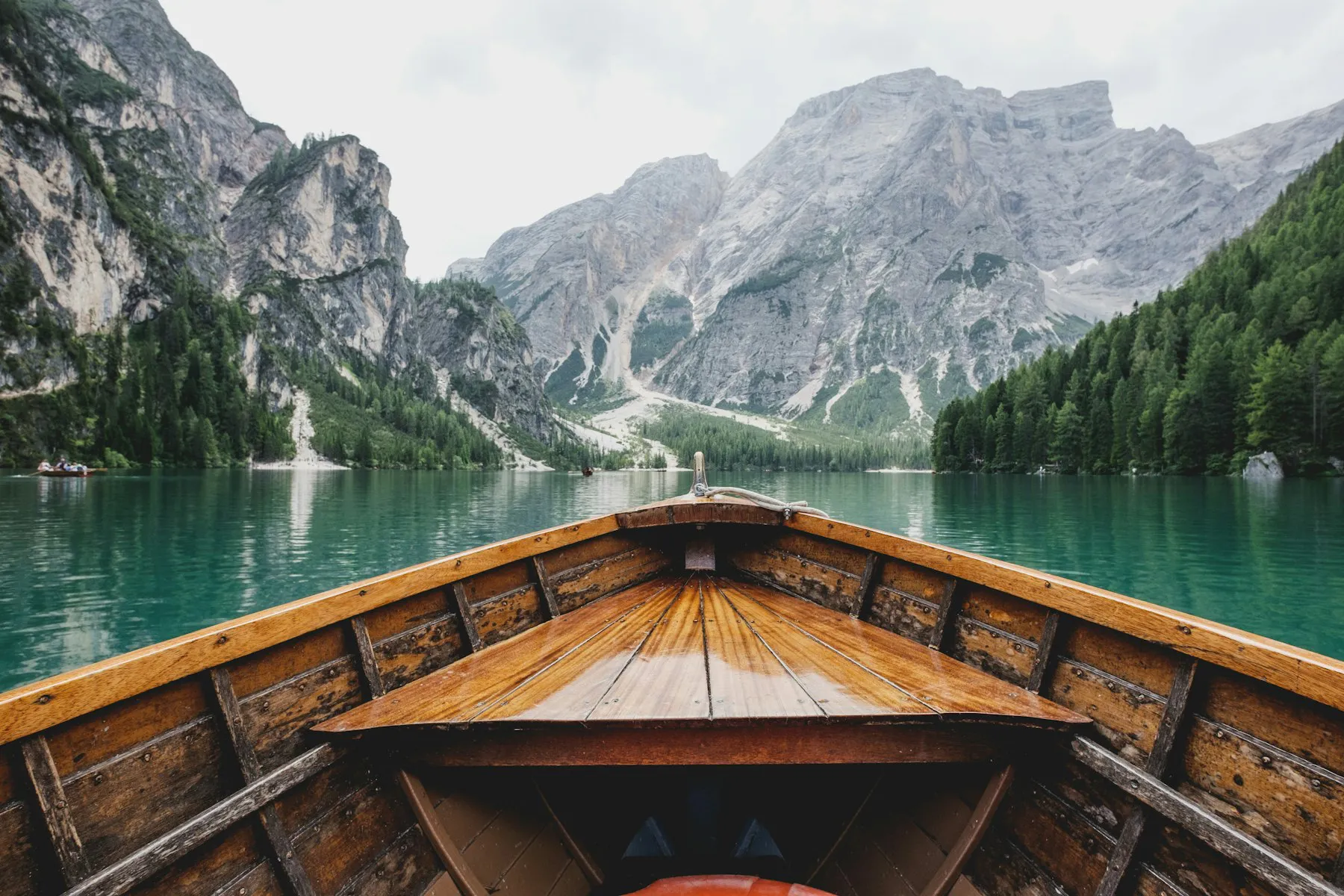
By eight o’clock on a July morning, the boardwalk at Lago di Braies is shoulder to shoulder. Tour groups shuffle along the shore, someone is always flying a drone they shouldn’t be, and the line for the rowboats curls back past the chapel. At six, the same lake belongs to the ducks, the boat keeper hosing down his dock, and you.
I nearly didn’t go. I’d seen the lake on a thousand phone screens and assumed it would be one of those places that photographs better than it feels. Then a woman who ran my guesthouse in Dobbiaco told me, very firmly, that I was wrong and that I should leave at 5:15. She was right. The hour after first light at Braies was the most peaceful hour of my whole two weeks in the Dolomites.
Here is how to be there for it, and what to do once the crowds arrive.
In this story6 sections
Why the early hour matters so much
Lago di Braies (Pragser Wildsee in German, since this corner of Italy is South Tyrol and almost everything has two names) sits at about 4,900 feet at the head of a narrow valley. At the south end, the pale limestone wall of the Seekofel, or Croda del Becco, rises nearly 4,000 feet straight out of the water. The color of the lake is the draw: a clear jade green over pale stones, shifting to deep blue in the middle.
Two things make dawn special. First, the water is almost always still before the morning breeze kicks in, so the mountain reflects perfectly. Second, the first sun hits the top of the Seekofel while the lake is still in shadow, and for ten minutes the summit turns peach, then gold, above a dark mirror. The sun doesn’t reach the water itself until later in the morning, which is fine. The glow on the peaks is the show.
And then there are the people. Braies gets well over a million visitors a year, most of them between 9 a.m. and 5 p.m. Before that, you will share the shore with a few photographers, a couple of runners and maybe a heron.

Getting in before the gates do
This is the part that changed recently and confuses a lot of visitors. In the peak summer season, roughly mid-July to mid-September, the road into the Braies valley is restricted between about 9:30 a.m. and 4 p.m. During those hours you need a prebooked parking slot or a seat on the public bus. Before 9:30, you can drive in and park at the lakeside lots, paying at the machine.
That means the sunrise plan solves two problems at once. I left Dobbiaco at 5:20 in my rental Fiat, drove about 20 minutes through dark villages, and parked in a nearly empty lot. Parking for the day was around $11 at the time. Check the official South Tyrol access rules before you go, because the dates and fees are reviewed each year.
Good to know
Sunrise in July is around 5:40 a.m., so aim to park by 5:15 for the blue hour. In late September it’s closer to 7 a.m., the road restrictions are usually lifted, and the larches on the slopes are just starting to turn gold. If I went again, I’d go then.
The first hour, minute by minute
I walked straight past the historic lakeside hotel and the little wooden chapel to the boathouse jetty, because that’s where the famous view is: the wooden rowboats lined up in rows, the green water, the wall of rock behind. At 5:40 there were four of us there. Nobody spoke above a whisper. One older man from Bolzano had brought a thermos and offered me coffee in the cap.
By 6:05 the Seekofel was lit up and I had taken far too many photos of the same scene. So I did the thing I’d recommend to anyone: I put the camera away and walked. The loop trail around the lake is about 2.2 miles (3.5 km), mostly flat, with one set of steps on the far shore. Going counterclockwise, the eastern side follows a gravel path right at the waterline, and the western side climbs a little through spruce forest with glimpses back toward the boathouse.
At six in the morning, the most photographed lake in the Dolomites forgot it was famous.
Maya Collins
Halfway around, at the south end, there’s a shallow stony beach where the trail toward the Seekofel hut begins. I sat there for twenty minutes with my feet in water that was barely above 50°F and watched the light slide down the cliff. When I got back to the boathouse at about 7:30, there were maybe thirty people. By 8:30 there were three hundred.
About those rowboats
Yes, you can rent one of the famous wooden boats, and yes, it’s a lovely way to see the lake from the middle. But the boathouse doesn’t open at dawn. In summer it typically starts renting around 9 or 9:30 a.m., and prices are steep: roughly $45 for half an hour and around $65 for an hour, with lines of 45 minutes or more by late morning. If the boat matters to you, be first in line at opening. If it doesn’t, the sunrise from the shore is the better experience anyway.
I came back two days later at opening time, rowed out for thirty minutes with a Dutch couple I’d met on the trail, and was glad I did it. I was also glad I hadn’t made it the whole point of the trip.
After sunrise: where to go next
Once the tour buses roll in, leave. The Pustertal valley is full of quieter places that would be famous anywhere else. A few that fit neatly into the rest of the day:
- Prato Piazza (Plätzwiese): a high meadow at the end of a side road from Ponticello, with huge views of the Dürrenstein and Hohe Gaisl. The road has seasonal restrictions too, so check the shuttle times.
- Lago di Dobbiaco: a smaller, calmer lake about 20 minutes away, with an easy nature trail and cheaper boats. Perfect for a slow afternoon.
- Tre Cime di Lavaredo: the big hike of the region, reached via the toll road from Misurina. Go early here too.
I spent the rest of my Braies day in a sunny café in Dobbiaco eating apple strudel at 10 a.m., which felt fully earned.
Getting there and where to base yourself
The closest major airports for flights from the US are Venice, about two and a half to three hours’ drive away, and Munich, about three and a half hours. Innsbruck is closer, at around two hours, but has fewer connections. From Venice I picked up a small rental car, drove north via Cortina d’Ampezzo, and based myself in Dobbiaco (Toblach) for four nights. Villabassa (Niederdorf) is closer to the Braies turnoff and equally pleasant.
Without a car, you can reach the region by train to Dobbiaco or Villabassa and take the regional bus up the valley, but the first buses don’t arrive in time for sunrise. The only car-free way to see dawn at the lake is to sleep at the lake itself, in the historic hotel on the shore, which books up months ahead in summer.
US citizens can visit Italy visa-free for up to 90 days with a passport valid at least three months beyond departure. Budget around $140 to $190 a night for a good guesthouse with breakfast in the valley in July, less in June and late September.
Set the alarm. Bring a warm layer, because it was 46°F at dawn in July, and something hot to drink. And when you get to the jetty and it’s quiet, put the phone down for a minute. That’s the part nobody posts.